.jpg)


.jpg) Jose Vallikatt
Jose Vallikatt
.jpg)
A fortnight ago a message popped up in our family WhatsApp group ostensibly promoting the members of the community we belong to. The same message, which also indicated a sort of contempt for another religious community, appeared in my maternal family group within a short while. In a day or two, a few of my friends discussed with me that the same message is being circulated in their family groups as well. A couple of days after another bigoted message appeared in my WhatsApp group again. This is what is going on in most Catholic family online groups in Kerala today.
An increasing number of mild hate messages are found to be circulating in hundreds of thousands of Christian family groups these days. Though most of these messages appear promoting the community spirit and solidarity, a close reading of them can trace grave communal undertones. While this new trend is a threat to social and communal harmony and progress, it also needs to be perceived as Church’s departure from its basic Biblical and theological foundations.
The Christian Language
If Christians have to be proud of something, it must be the language Christ had given them. Use of this unique and fascinating language is obligatory for one to be a Christian because Jesus gave this language as a commandment and as a New Law (Jn. 13: 34-35; 15; 12-17). If someone feels it to be tough to follow, Jesus would gracefully advise one not to follow his path (Jn. 6: 66-67).
This ineffable language, which is known to be a language of love and mercy, is not exclusive to the verbal ex
Interestingly the hyperbolic teaching of Jesus goes to the extent of going beyond the ordinary and commonplace. It prompts not to limit yourself loving only those who love you; not to enjoy doing good only to those who do good to yourself; and not to restrict yourself lending money to those from whom you hope to receive (Lk 6: 32-34).
Christianity has been consistently following this language universally for most time though in a few instances they have deviated. Diversion from this language is largely perceived as deception of Christian roots itself.
Growing Islamophobia
In Kerala, Islamophobia among Christian community is increasing in the recent years. Unprecedented animosity is slowly boiling between the two communities that were living in amity for several centuries. Several social and religious issues have developed between the communities in the recent past like chopping off the hand of Mr P. J. Joseph, a college professor, by the Islamic extremists; preaching by some Salafi scholars against the Biblical revelations; and the marrying of Christian girls by Muslim boys with pretended love (popularly known as love Jihad) to mention a few. However, the present rift is not merely reduced to religious differences, but stretches to socio-political as well.
Some of these political issues disproportionately blown up are not really locally relevant but are international such as conversion of Hagia Sofia into a mosque; religious violence against Christians in some African countries; and the recent tussle between Israel and Palestinian Hamas. Lastly, a court verdict (apparently favouring Christian community) on the issue of scholarships for minority students as well as reservation for economically weaker sections has fractured the friendship further.
It is only with a sense of shock and turbulence we can perceive this growing unrest between the two religious communities that claim their ancestral lineage to the biblical figure Abraham. The tensions have slowly been developing to a level which at any time can erupt into an explosion, unless something concrete shall be done with a purpose of peace building.
However, it is evident that extremist elements of Islam have been increasingly visible in the Kerala society. Some may be apparent where as some others may be imagined. The real Muslim community has the responsibility to assure other religious communities that they take every measure to ward the extremists away.
The Paradoxes
Initially these issues were brought to public by some individuals and social media groups within the Christian community. However, their language was neither Christian nor politically correct although they pretended to be saving the Church and its members from a potential religious adversary. Religious jingoism, hatred, and spreading fear marked their language. Surprisingly, some priests who held prominent ecclesiastical offices and retreat preachers joined the band. Prominently they used social media such as Youtube and Facebook. Then they used evangelical television channels, not owned by the Church, to massively spread hate messages. Nonetheless, the use of WhatsApp is the most penetrating and a silent super spreader of communal virus.
While the newly formed conglomeration is perceived to be an organised movement against the Islamic community, some interesting paradoxes can be observed. First of all, many Christians who were ideologically polarised previously have come together to fight the Islamists.
Secondly, many Catholic charismatic preachers, who are supposed to proclaim reconciliation and peace, have joined the violent chorus against the Islamic community. In doing so they have joined hands with the Pentecostal evangelical preachers and approaches which the Catholics had been fighting until a decade ago.
Thirdly, they have tuned themselves to the right wing fascist methods evident from the methods and patterns of the language. The present method of casting capsule messages – most of which are half-truths and hateful – derives from fascist political groups. Lastly, the ecclesiastical leaders have not yet raised serious voice to stop such toxic talks from which we should infer that they bolster the boil.
Revitalise the lost language
As the present situation is very threatening to the social harmony as well as purity of Christian foundations, it is imperative for the Church to renew and revitalise the lost language. As mentioned earlier, the heart of Christianity is in reconciling the differences and living in peace with fellow beings. The Church has rich legacy of theological, spiritual and diplomatic methods to solve crises and tensions if and when they arise. It is in following these principles that they prove to be Christians (Jn. 13: 35).
It is the right and obligation of every Christian to defend their faith. While that is a supreme act of faith, they must do it with an act of love. Dialogue is a key ministry of the Church through which she opens doors for mutual understanding. Envisioning a world without borders, Pope Francis has clearly stated in Fratelli Tuti that any “political manipulation of religions” as well as “interpretations made by religious groups who have taken advantage of the power of religious sentiment” shall be avoided for a religious peace and harmony between Christianity and Islam (FT 285). In his Evangelii Gaudium, Pope Francis advises: “Faced with disconcerting episodes of violent fundamentalism, our respect for true followers of Islam should lead us to avoid hateful generalisations, for authentic Islam and the proper reading of the Koran are opposed to every form of violence” (EG 253).
Defending faith also implies speaking truth. We are witnesses of Truth who is Jesus Christ. St Paul has elaborated this idea in many of his epistles. In situations we feel that Christians are being persecuted, Paul says we must "speak the truth in love” (Eph. 4:15). "Let your conversation be always full of grace, seasoned with salt" (Col. 4:6). Peter instructs Christians to defend their faith, "with gentleness and respect" (I Pet. 3:15). Just as Jesus did not revile in return (I Pet. 2:23), when people insults, Christians should respond mildly and without offense (Matthew 5:38-39). Because Christians are called to peace (Mt. 5:9; I Cor. 7:15; Rom 12:18).
Immediate Responses
The Catholic and other Christian leadership can now no more be silent spectators of this rile between communities and religion. This is the time they have to come to the field with the can of oil. They should take initiative to apply the balm on wounded and divided hearts.
Much of the rift between communities can be solved through dialogues and discussions. Hence it is important that the leadership come forward to dialogue with communities. This is an activity requiring “suitable training” in order that “they can be solidly and joyfully grounded in their own identity, but so that they can also acknowledge the values of others, appreciate the concerns underlying their demands and shed light on shared beliefs” (EG 253).
Certain issues really need political solutions. Such issues shall be settled taking political leaders in good faith.
Above all what we need is to trust in the Lord Jesus who has conquered all evils in the world. However, an immediate admonition to the warring members of the Christian community for restraining their toxic tongues is the perfect antidote to build peace.
.jpg)
.png) Cedric Prakash
Cedric Prakash

.jpg) Elsa Lycias Joel
Elsa Lycias Joel
.jpg)
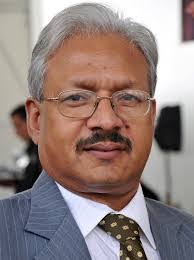 A. J. Philip

.png) Jacob Peenikaparambil
Jacob Peenikaparambil
.jpg)
.png) John Dayal
John Dayal
.jpg)
.jpg)
.png) Joseph Maliakan
Joseph Maliakan
.png)
.png) Robert Clements
Robert Clements
.jpg) Cedric Prakash
Cedric Prakash

 ICPA
ICPA