


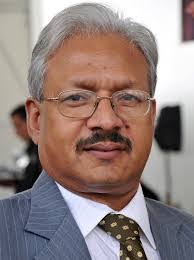
.png) Dr Suresh Mathew
Dr Suresh Mathew

The direction of the Constitution of India that ‘it shall be the duty of every citizen to develop scientific temper and the spirit of inquiry and reform’ has been made to stand on its head with superstitions penetrating everyday life of the people. Some of the recent brutal incidents make us hang our head in shame.
The latest one comes from one of the most literate States, Kerala, which has acquired, for all wrong reasons it seems, the moniker of ‘God’s own Country’. The human sacrifice of two women at a small town in Kerala has shaken the conscience of right-thinking people. The fact that it was done to enhance prosperity of a family on the advice of a ‘traditional healer’ makes it a diabolic stigma; it is nothing less than a slap on the face of a State which was the first to elect a Communist government in the country. The ‘most cruelest’ and barbaric episode is a shame for a State which claims to be the leader of renaissance in the country.
There is no dearth of superstitious beliefs in India. Unfortunately, the guardians of the Constitution, who are bound to protect the statute, are themselves the ones who flout the scientific spirit envisioned in the Constitution.
When the country was in the thick of fighting Covid 19 pandemic, it was none else but the Prime Minister himself who asked the people to light lamps, torches, candles, etc. for 9 minutes at 9 pm on April 5, 2021 to mark the fight against the epidemic. There is nothing more ridiculous than such measures.
There are still superstitions about menstruation and practice of ‘untouchability’ related to it. Top leaders of the country have no qualms in making unscientific claims like India is the inventor of plastic surgery, use of internet and missiles many millennia ago. Even more bizarre is that such claims are made in the gathering of people attending the Science Congress. When quacks make claims like cow urine cures cancer, no effort is made to counter such ‘unsound’ assertions.
Despite the existence of numerous superstitious and unscientific beliefs, no political party or government has made any serious effort to counter them. A nationwide legislation to deal with superstitious practices, black magic or human sacrifice with severe punishment could help contain them to a great extent. Unfortunately, no such law exists, though a few State governments have enacted laws in this regard. Bihar emerged a pioneer by introducing Prevention of Witch Practices Act to address inhumane rituals. Maharashtra and Karnataka too have passed similar laws banning the practice of human sacrifice and such heartless acts. Though the Kerala had initiated a Bill on the above lines, it has failed to take off.
It is true that laws alone may not be sufficient to remove superstitions lock, stock and barrel as they are related to beliefs embedded in human psyche. An unwavering determination to fight superstition can put a stop to irrational, brutal practices. If only our leaders – religious, political and social – have a resolve to promote scientific temper as prescribed in the Constitution, these evils can be wiped out from the society. Or else the country will continue to be mired in such practices.
.jpg)
.png) Cedric Prakash
Cedric Prakash

 ICPA
ICPA
 ICPA
ICPA
 ICPA
ICPA
 ICPA
ICPA
 ICPA
ICPA
 ICPA
ICPA
.jpg)
 A. J. Philip
.jpg)
.png) Jacob Peenikaparambil
Jacob Peenikaparambil
.jpg)
.png) John Dayal
John Dayal