.jpg)

.png) Dr Suresh Mathew
Dr Suresh Mathew
.jpg)
The crisis brewing in the picturesque Lakshadweep is not just one of its kind. It has to be seen in the background of Narendra Modi government’s shrewd efforts to invest the Centre with more power, thereby reducing the States and the Union Territories as its fiefdoms.
One got a bitter taste of this in J&K when the State was bifurcated into two Union Territories bringing it under the control of the Centre; one witnessed this ugly and acerbic move when the Delhi government was redefined to mean the Lieutenant Governor; in Pondicherry, a different game was played wherein an elected government was made to fall by undemocratic means.
In States like Arunachal Pradesh, Goa, Manipur and Madhya Pradesh, the ruling party at the Centre made sure that power remained with it though the party did not have the majority to form the government.
In Lakshadweep, there is blatant interference by Administrator Praful K Patel who is a political appointee. A former Home Minister of Gujarat under Narendra Modi as Chief Minister, his new ‘diktats’ have spread utter disquiet in the island.
The break-neck speed with which he tries to take control of ‘governance’ smacks of an agenda. At a time when the focus is on decentralization of power to panchayat level, the opposite is happening under Patel. He has taken over the powers hitherto enjoyed by panchayats; it is nothing but an anti-democratic and dictatorial move.
In a Union Territory, with one of the lowest crime rates, the enforcement of Goonda Act is apparently an act with ulterior motives. One has seen the hidden agenda of the Central Government in applying Unlawful Activities (Prevention) Act, National Security Act and Sedition laws to suppress voices of dissent and criticism across the country. A similar pattern is percolating down to even the smallest Union Territory.
The new administrator’s interference has stooped to the level of controlling the dietary habits and changing demography of the islanders. Proposals like a ban on beef and disqualification of aspirants for panchayat elections with more than two children have led to turmoil in the minority-dominated Union Territory. Equally distressing is the removal of meat from the mid-day meal of school children. The proposed development of highways in tiny islands to promote tourism speaks volumes of the lopsided priority of the Administration which has scant regard for the pathetic healthcare sector in the Union Territory.
But Patel seems to be following the foot-steps of his role models in Delhi. Announcing the first nation-wide lockdown, Prime Minister Narendra Modi had asked people to remain indoors to contain the spread of virus. One year down the line, as the nation was in the throes of the second wave of Covid, which is more alarming and life-threatening, Mr. Modi congratulated the people of West Bengal for coming out in large numbers to attend one of his election rallies. Patel reportedly moved on the same path.
The Union Territory had not seen Covid cases in 2020 due to the strict measures it had adopted in screening travellers to the island. The new Administrator relaxed the rules and norms of mandatory quarantine of island-bound travellers, leading to steep rise in Covid cases. It is time to recall Patel, probably the first politician to hold that post in Lakshadweep, to put the aggrieved islanders at ease.

.jpg) Stanislaus Alla
Stanislaus Alla
.jpg)
.png) Cedric Prakash
Cedric Prakash

.jpg) Elsa Lycias Joel
Elsa Lycias Joel
.jpg)
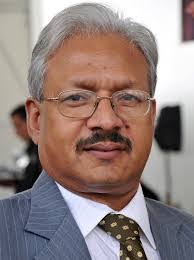 A. J. Philip

.png) Jacob Peenikaparambil
Jacob Peenikaparambil
.jpg)
.png) John Dayal
John Dayal
.jpg)
.jpg)
.png) Joseph Maliakan
Joseph Maliakan
.png)
.png) Robert Clements
Robert Clements
.jpg) Cedric Prakash
Cedric Prakash