 (1).jpg)


.png) Dr Suresh Mathew
Dr Suresh Mathew
 (1).jpg)
‘There are three internal threats to India -- Muslims, Christians and Communists,’ said Hindutva ideologue and the second RSS sarsanghchalak M.S.Golwalkar several decades back. His detesting declaration, unfounded to the core, is increasingly finding takers in the recent past.
After unleashing lynching mobs on Muslims in various parts of the country, the target has now turned to Christians as never before. Christian institutions like churches, convents and schools -- besides priests, pastors and faithful -- have been their frequent victims.
Now they have found another target -- orphanages, care homes for physically challenged children and similar institutions run by Christian missionaries. They have become sitting ducks to the prying eyes of some of the government agencies. Though they call it ‘investigation’, it is nothing but a euphemism for ‘raids. It is meant to hound and harass the good Samaritans who are taking care of the marginalised souls left out in the society.
The new breed of ‘tormentors’ includes the National Commission for Protection of Child Rights (NCPCR) and the District Child Welfare Committees. In the last couple of years, Priyank Kanungo, the chief of the NCPCR, has descended on several orphanages, students’ hostels, child care centres, and such places, run by Catholic priests and nuns, and accused them of forcible conversion of inmates.
In Gujarat, a case was registered a couple of years back in a Vadodara court, and two nuns of the Missionaries of Charity were booked for allegedly “luring young girls towards Christianity” in a shelter home run by them. This happened after Kanungo’s visit to the home and his report to the District Child Welfare Committee. In Tamil Nadu, Kanungo made similar observations regarding a couple of suicides by students in hostels run by Catholic church. However, the investigating agencies found little truth in the allegation that the suicides were the result of the authorities’ attempt at forcible conversions.
The latest and most blatant insinuation from the NCPCR chief came after a ‘raid’ by him and his team at orphanages in Sagar and Jabalpur in Madhya Pradesh run by the Catholic church. He parroted, without any proof, the same allegations of ‘forcible conversion’ of young inmates there, following which cases were registered against its authorities.
The State Commission for Child Rights went to a boys and girls boarding and a child care institute. The ‘raiding’ team even entered women’s living quarters at odd time, bypassing and violating the laws in this regard. They did not leave out the church within the premises and entered it with malicious intent. The Bishop of Jabalpur too has been named in the FIRs without any rhyme or reason.
The latest in the series of attacks on Christians came from yet another Hindutva laboratory, Haryana, where saffron-clad fundamentalists manhandled priests-in-charge and demanded closure of two churches under the Delhi Archdiocese. The Hindutva hooligans went on a rampage alleging forcible conversions in the church. The priests refuted the false allegations of the villagers, but the attackers’ agenda seems to be to ‘cleanse’ the villages of the very presence of Christians. The barrage of attacks is a clear sign of what is in store for even the good Samaritans in this country.
.jpg)
.png) Cedric Prakash
Cedric Prakash

 ICPA
ICPA
 ICPA
ICPA
 ICPA
ICPA
 ICPA
ICPA
 ICPA
ICPA
 ICPA
ICPA
.jpg)
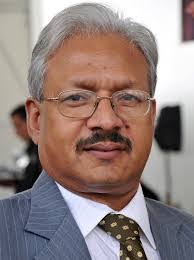 A. J. Philip
.jpg)
.png) Jacob Peenikaparambil
Jacob Peenikaparambil
.jpg)
.png) John Dayal
John Dayal