

 Fr. Gaurav Nair
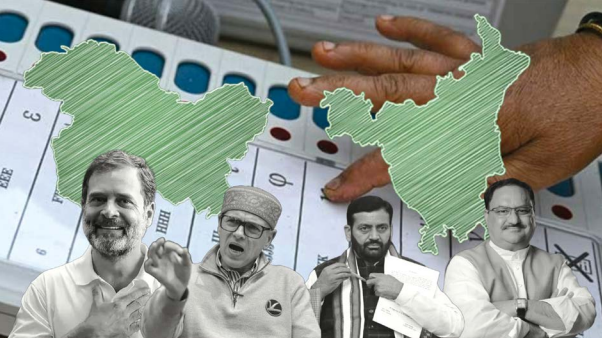
The Congress party’s loss in Haryana cannot all be relegated to the EVM. They might have played a crucial part in it, but the show was not overwhelming in the first place. The ideological paralysis of Congress is one of its most significant weaknesses. It has never stuck to walking the talk. While it makes utopian promises of bringing the Constitution to life, it somehow miraculously flounders on acting on it. This wobbliness leaves the party utterly disoriented, trying to please everyone but ultimately satisfying no one.
The Congress is caught in a dilemma: Should it embrace its legacy as the party of secularism and social welfare? Or should it cave to populism, trying to replicate the BJP’s winning formula of mixing nationalism, religion, and caste? In trying to do both, Congress has lost its soul and its voters. The sad reality is that while the BJP plays a dangerous, albeit effective, game of caste and religious politics, Congress can’t seem to figure out which game it’s playing at all.
In Haryana, Congress’ attempts to woo the Jats kept the Dalits off board. Meanwhile, in Jammu and Kashmir, the party’s approach was baffling. First, there was outrage, then silence, and then some promises to restore autonomy. Even though it won in the valley, the victory relied on a lack of alternatives.
What really drives home Congress’ penchant for self-sabotage is its leadership. The party is a senior citizens’ club where the young and dynamic are thwarted. Any attempt at grooming fresh leadership is quickly quashed by the old guard, terrified of losing their grip on power. In Haryana, Congress decided to stick with its veterans. In doing so, it effectively alienated a huge section of voters who are fed up with the same old faces promising the same old unfulfilled dreams.
This culture of pandering to senior leaders is driven by the fear of losing huge vote banks. In trying to cling to power, the Congress leadership has ensured its own downfall. At this point, Congress has become a self-fulfilling prophecy.
While Congress was shooting itself in the foot, smaller parties quietly chipped away at its vote bank. The smaller parties may not have won big, but they were crucial in ensuring that Congress didn’t either. By splitting the anti-BJP vote, they helped the saffron juggernaut roll on.
The BJP knows exactly how to exploit the divisions that Congress can’t seem to manage. In both Haryana and Jammu & Kashmir, the BJP again played the caste and religion cards like seasoned players. In Haryana, they deftly navigated the complex caste matrix, making inroads with the Dalits and non-Jat communities. In Jammu & Kashmir, they relied heavily on religious polarisation, appealing to the Hindu voters.
For all its many faults, the BJP has one thing Congress does not: a clear and ruthless strategy. They know exactly who they are and what they stand for, even if it means playing dirty with caste and religion. Congress, meanwhile, is too busy trying to figure out how to appease its seniors, avoid taking a stance, and still look like the party of the people.
.jpg)
.png) Cedric Prakash
Cedric Prakash

 ICPA
ICPA
 ICPA
ICPA
 ICPA
ICPA
 ICPA
ICPA
 ICPA
ICPA
 ICPA
ICPA
.jpg)
 A. J. Philip
.jpg)
.png) Jacob Peenikaparambil
Jacob Peenikaparambil
.jpg)
.png) John Dayal
John Dayal