.jpg)


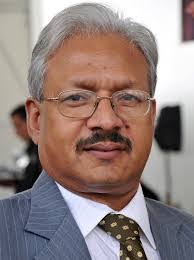
.png) Dr Suresh Mathew
Dr Suresh Mathew
.jpg)
The Pegasus snooping scandal is getting murkier by the day. The stink it raises is not going to die down so easily, especially with the government acting like an ostrich. There are contradictions galore in the versions given by the government and NSO, which is the manufacturer of the spyware. The Israeli company has unequivocally stated that it does not sell the software to any individual or organization other than governments or their agencies. On the contrary, responsible people in the government, including Ministers, are vouching that they have neither bought it nor given authority to anybody to own and operate it. Those good at procrastination believe that they can deceive people telling lies like a hot knife through butter. But they may not succeed in brazening it out all the time.
The capability of Pegasus to surreptitiously infiltrate into targeted phones to extract information, without leaving any sign of it, makes it an extremely dubious spyware. According to reports appearing in national and international media, around 300 verified phone numbers of Indians are among half a lakh numbers leaked out of Pegasus data base. There is a common thread that links Pegasus snooping across the world. Those subjected to spying are mostly politicians, activists, journalists, lawyers and academicians who have raised dissenting voices against ‘autocratic’ regimes. Among them are individuals who have sided with the oppressed people whose fundamental rights have been snatched away by insensitive governments. By no stretch of imagination, the profiles of those subjected to clandestine snooping indicate that their surveillance was necessitated by national security or public safety concerns.
The Pegasus manufacturer has reiterated that it allows its clients, which are none else but governments and their agencies, to use the spyware for fighting crime and terror. This indicates that either the government or some of its investigating agencies indulged in this highly condemnable activity which infringes upon the privacy of individuals. As the buck stops with the Central government, it has to go an extra mile to come clean on the issue. Intriguingly, the new Union Minister for Information Technology has asked those with complaint to approach the law enforcing agencies to file FIR and get the accused behind bars. If the government has nothing to hide, and has no skeletons in its cupboard, why should it be scared of probing the issue to get to the bottom of the truth.
The Pegasus scandal has another crucial fall-out. It vindicates that the computers of the accused in Elgar Parishad case could have been tampered with. An American forensic lab had confirmed that questionable material had been inserted into the computer of Rona Wilson, one of the accused, by using a malware to establish his links with Maoists. The other accused, including late Fr. Stan Swamy, too had made similar complaint to the court hearing their cases. The Pegasus snooping has confirmed the possibility of their computers being meddled with to stage-manage proof so that those speak up for the Tribals and the downtrodden are made to languish behind bars. What is happening is worse than hacking by those who have become vulnerable to public criticism. Is democratic India slowly degenerating into a surveillance state?
.jpg)
.png) Cedric Prakash
Cedric Prakash

 ICPA
ICPA
 ICPA
ICPA
 ICPA
ICPA
 ICPA
ICPA
 ICPA
ICPA
 ICPA
ICPA
.jpg)
 A. J. Philip
.jpg)
.png) Jacob Peenikaparambil
Jacob Peenikaparambil
.jpg)
.png) John Dayal
John Dayal