.png)


 Fr. Gaurav Nair

The recent Supreme Court verdict on the remission of the 11 perpetrators of the Bilkis Bano rape case has been adjudged by some as "landmark". The judgement is sound. Justices B V Nagarathna and Ujjal Bhuyan delivered justice to Bilkis, the millions supporting her, and many others awaiting justice. Kudos to them. However, the appellation attached to it being a pioneering judgement is appalling, considering the unbounded ramifications that it alludes to. Doesn't it mean that justice is the outlier in our system, a momentary spark or a candle in the wind?
The judgement is a breath of fresh air in the asphyxiating climate of our country. The judges, in no uncertain terms, stated that the state government was complicit in freeing the damned criminals, a break from the impunity the government has lately been operating with. However, beyond vituperation, no action has been taken against those who facilitated their discharge.
The verdict mandates the eleven to return to prison. Sadly, amid the jubilation surrounding the verdict, its injunctions remain forgotten. Reportedly, those who did the dastardly act are now untraceable. The Supreme Court observed that the offenders had been flitting in and out of the jail as if it were their backyards. To be enabled to such a degree plainly intimates the placement of their connections.
The abominable and bestial rape of Bilkis Bano and others of her family and their murder is one of the most vicious incidents the world has ever seen, and yet the felons were garlanded on their release. It does not take a rocket scientist to guess our society's unmitigated degeneration of morals.
Attacks, where such depravity is let loose, have become relatively commonplace recently, many at the behest and under the auspices of the regime. Manipur's ruthless and inhuman happenings haven't yet ceased to relegate them to the attic of memories. The adroitness with which such criminals were unshackled begs reflection.
Women in India were unsafe to begin with. A projection of the current exploit would answer where this affliction stems from. Those who would do such acts are free to resume their predatory activities. Anyone unamenable to this hypothesis is incognizant of the vociferations surrounding the WFI or congruous with the malfeasant who perpetrates such abominations. Regardless of the accusations against BJP MP Mr Brij Bhushan, he eludes incarceration when many lesser mortals would have been gaoled without deliverance long ago.
Acclamation of such acts should be an eye-opener to what the future has in store for the nation's denizens. Though it will plausibly be brushed off by many as an alarmist statement, the truth is that the death of a democratic and secular is progressively closing upon us, the palpitations growing with each passing day. Those clamouring for an exclusive "Hindu" nation ought to comprehend that democracy cannot be exclusive of secularism. The day India loses its secular status, the people are bound to lose their power over the government. What we are actually moving towards is a totalitarian pseudo-theocracy.
The inauguration of the Ram Temple in Ayodhya on January 22, 2024, is proclaimed to be the establishment of Ram Rajya. Ram's deeds and demeanour will not only be reminisced about but will hopefully be implemented. If the country's deplorable moral condition is anything to go by, the probability of the hope's actualization on a scale of one to ten seems zero. Before long, everyone will be going - HE RAM! Only that it will be in despair!
.jpg)
.png) Cedric Prakash
Cedric Prakash

.jpg) Elsa Lycias Joel
Elsa Lycias Joel
.jpg)
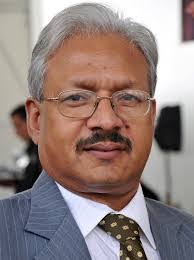 A. J. Philip

.png) Jacob Peenikaparambil
Jacob Peenikaparambil
.jpg)
.png) John Dayal
John Dayal
.jpg)
.jpg)
.png) Joseph Maliakan
Joseph Maliakan
.png)
.png) Robert Clements
Robert Clements
.jpg) Cedric Prakash
Cedric Prakash

 ICPA
ICPA