

.png) Jaswant Kaur
Jaswant Kaur

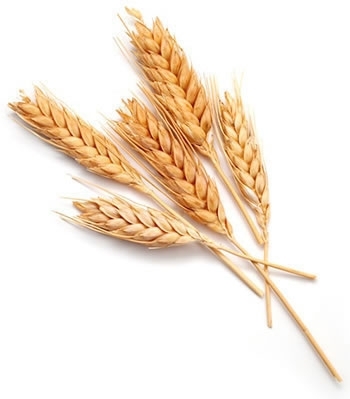
Last week, the entire global fraternity looked confused and shocked, to be precise, at the sudden move of the Indian government. At a time when the world was looking at India as its saviour, the government backed out. While giving his inaugural address at the 2+2 ministerial, Prime Minister Narendra Modi said that if the WTO (World Trade Organisation) allows us to export grains, India will start exporting from tomorrow “to feed the world”. “Whenever humanity is faced with a crisis, India comes up with a solution,” he said.
The statement gave a lot of assurance to the countries affected by dwindling wheat supply due to the Russia-Ukraine war. After such a sweeping statement, what forced Modi to take a U-turn, and announce a ban on wheat exports. This knee-jerk reaction came a day after a delegation was sent to various countries to explore ways to increase wheat exports! Clearly, it does not appear to be a well-thought-out decision.
News reports showed how thousands of trucks full of wheat were awaiting their turn for unloading at the Kandla Port. The move certainly bought a lot of despair among the farmers, who expected huge profits from the overseas sales. Their dream of earning a fortune was shattered in a jiffy, as they got a price higher than the MSP announced by the government through export sales. Agitated, they came on the streets in Punjab requesting the government to review the decision.
Of course, the government allowed a few shipments, essentially in the case of previously issued irrevocable letter of credit (LC) or bank guarantee and on a special request received from certain countries. Why did the government take such a decision at the eleventh hour?
The official notification says that a decision has been taken “to manage the overall food security of the country and to support the needs of the neighbouring and other vulnerable countries.” Quoting the commerce secretary BVR Subrahmanyam, a report mentioned that the move was necessary to ensure fair wheat trading practices and to curb hoarding, which has led to an increase in wheat prices. “It was not wheat alone. The rise in overall prices raised concerns about inflation and that’s why the government had to ban wheat exports,” the report mentioned.
Now the question is: Were we not aware of the “food security issues” that the country might face before making such an announcement at a global platform. After all, food inflation did not take place overnight. In fact, it was there even before the Russia-Ukraine war.
Why did the government not devise a policy to control rising food prices? Why did it not think that the marginalised who were struggling to make ends meet due to reduced income, might not be having their meals properly?
In fact, several newspaper reports had highlighted such issues much before the onset of the wheat harvesting season. A survey of 6,500 families in 14 states conducted by Hunger Watch revealed that more than two-thirds of the families were unable to afford cooking gas. It was common to see people skipping meals and 50 percent of the families ran out of food a month before this survey was conducted.
Another study conducted by Azim Premji University with 3,000 families in Bengaluru had similar findings. The report shows that around 40 percent of the workers who lost their jobs during the pandemic are still unemployed. Four out of 10 families have started eating less than the pre-pandemic phase. Not only this, they have borrowed money from informal sources or have sold or mortgaged their jewellery to meet their day-to-day expenses. In view of such circumstances, pressure on government schemes and public distribution systems is likely to increase.
To add to the woes, wheat production is expected to be lower than the expected 111 MMT (million metric tonnes). Wheat procurement is expected to be 19 to 20 MMT against last year’s 43 MMT as large quantities were exported even before the ban was announced.
By the time the ban was introduced, we had already exported six times more than the corresponding period in the last year. In view of this, how is the government going to sustain its food distribution system under the national food security Act?
During the pandemic, the government added 800 million Indians to its food subsidy quota under Pradhan Mantri Gareeb Kalyan AnnaYojana (PMGKAY). A majority of them have not recovered from the economic shock even now as mentioned in this write-up. The food subsidy bill is likely to cross Rs. 2.8 lakh crore this year. The government has already decided to replace wheat with rice to the maximum extent possible. It only shows that the crisis is much deeper than it is visible on the face of it.
The unprecedented heat during the month of March this year had an adverse effect on wheat production. But temperatures are likely to increase year on year. Will India’s poor continue to suffer? Simply because our policy makers have been habitually ignoring important strategic data or information.
Rather, the government should have come into action at the very beginning of this year when food prices had started rising. The Reserve Bank thinks that it can control inflation by increasing the repo rate. And the government thinks that a ban on wheat exports can control food inflation! Will lower supply with high demand not affect the wheat prices? In other words, wheat prices are unlikely to come down. Even now, it is way beyond the MSP announced by the government.
However, the ban has certainly put our credibility as a nation at stake. It has also exposed that our export policies are not effective and can be changed overnight at the drop of a pin. The government should have not only foreseen a situation like this but should have addressed real issues that India Inc., is faced with effectively. Ignoring the harsh realities is bound to cost us more in the long run. We cannot have an undernourished population and think of making India a $5 trillion economy in the next two years! That too at a time when unemployment is at its peak and people do not have any purchasing power!
Similarly, climate change needs immediate attention. A study conducted by Deloitte has found that rising temperatures have reduced our crop yields by 5.3 percent from 1981 to 2019. This may sound trivial at first glance. But the economic value of this loss is expected to be to the tune of $35 trillion by 2070, which is around 12.5 percent of the GDP in case we as a country do not take any action to adapt to and mitigate climate change. Our crops will continue to suffer. Not only this, we may lose 100 billion work hours every year if such heat waves continue to persist. The poor will only become poorer. Food inflation will continue to increase. Moreover, climate change is likely to accentuate health issues also.
It is time to reflect and think. We have only two options – to act or to ignore. By choosing one we can grow at a faster pace and the other can lead us to a crisis. Choice is all ours.
(The writer, a company secretary, can be reached at jassi.rai@gmail.com)

.jpg) Stanislaus Alla
Stanislaus Alla
.jpg)
.png) Cedric Prakash
Cedric Prakash

.jpg) Elsa Lycias Joel
Elsa Lycias Joel
.jpg)
 A. J. Philip

.png) Jacob Peenikaparambil
Jacob Peenikaparambil
.jpg)
.png) John Dayal
John Dayal
.jpg)
.jpg)
.png) Joseph Maliakan
Joseph Maliakan
.png)
.png) Robert Clements
Robert Clements
.jpg) Cedric Prakash
Cedric Prakash