

 Chhotebhai

OBJECTIONS TO THE PROPOSED
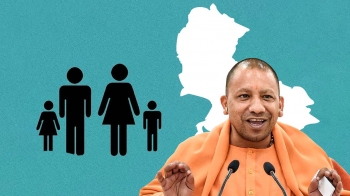
“The Uttar Pradesh Population (Control, Stabilization and Welfare) Bill, 2021”
1. OBJECTION TO NOTIFICATION: The State Law Commission U.P. has issued a “Notification” asking for suggestions/modifications, etc. to the proposed Bill that should be sent to an email id before 19/7/2021. The purported notification begins with the words “I shall be personally thankful to you”. This is in first person, singular. However, the name, designation and address of the person are not mentioned, nor the date of the purported notification. On this ground alone the purported notification is bad in law and should be withdrawn/re-issued in a legally maintainable manner. Since the purported notification is undated it is impossible to ascertain the window of opportunity afforded to the public to submit their suggestions/objections etc. It is, therefore, requested that a fresh notification be issued; duly signed by the designated authority, giving the public at least 60 days’ notice to submit their replies. A postal address, and not just an email id, should be provided, as computer hacking and fake email ids abound.
2. BASIS OF THE EXERCISE: What is the goal or purpose of this exercise? The popular perception is that this is not a social welfare measure, but an astute “surgical strike” to further polarise society on religious lines, by raising the bogey of a burgeoning Muslim population, thereby reaping huge electoral dividends. For years we have heard the slogans “Hum do hamare do” (We two, our two) in reference to Hindus: and “Unke panch aur pacheese” (They have 5 and twenty five), thereby implying that Muslims have five wives and twenty five children. Prima facie this is absurd, given the skewed sex ratio, even among Muslims. Assuming, without admitting, that Muslims have five wives, then there would also be four Muslim men without wives! Further, is there any empirical evidence to establish that any Muslim family in U.P. has 25 children? It is an absurdity. This is baseless propaganda being used for ulterior motives and vested interests.
3. CENSUS DATA: Instead of going by alarming and sensational sloganeering, let us objectively look at the official Govt data as available with the Census Commissioner. From pre-Independence times we have had the Census conducted every ten years (decade). The next census is due now in 2021. If indeed the Government of U.P. is serious about population growth then it should have awaited the findings of the Census 2021 before jumping to conclusions. The best way to assess population growth of various religions is to study the Decadal Growth Rate (DGR), and not just the absolute numbers of the population. Data accessed from the official website of the Census Commissioner shows that the DGR for Hindus in 2001-2011 was 16.76%, as against 19.92% in the previous decade (1991-2001). The corresponding figures for Muslims are 24.6% and 29.5%, showing a dramatic drop of 5 percentage points. According to Prof Devendra Kothari of Population Programme Management, Jaipur, the Muslim DGR for 2011-2021 is projected to drop further to 18.2%, that is six more percentage points, bringing it to almost the same level as the Hindu DGR of 16.76%. Kothari, who has degrees in population sciences from Harvard University USA and the Australian National University, in an article dt 20/11/20, states that in pre-Independence India the Hindu population was 66%. In 2011 it was 79.8% and in 2021 it is projected to go up further to 80.3%. In contrast, in 2011 the Muslims in India were just 14.23%. In U.P., that now directly concerns us, Hindus in 2011 were 79.73%, on par with the national average. So what is the Govt of U.P. alarmed about or afraid of? It is for this reason that Kothari quotes 2019 Economics Nobel Laureate, Prof Abhijit Banerjee, that the “alleged Muslim takeover of India is baseless”.
4. CHRISTIAN POPULATION: Another bogey that is being bandied about is the alleged mass conversions to Christianity by “missionaries”. However, Census data reveals that the Christian population peaked in 1971 at 2.6% (24 years after the British left) and was down to 2.3% in 2011. Kothari states that this is expected to drop further to 2.25% in 2021. So why the propaganda and tirade against the Christians of India, where Christianity flourished several centuries before it spread to various parts of Europe?
5. SPECIFIC PROVISIONS: Now let us address specific provisions of the Bill.
a. In I(3) it states that the Bill will “come into force after one year from the date of publication in the Gazette”. This is reasonable.
b. The provision for multiple births in a single pregnancy I(6) is to be appreciated.
c. Chapter II, No 4 on incentives to those adopting the one or two-child norm is to be appreciated and encouraged.
d. Chapter II No 7 on special incentives to BPL families is to be appreciated.
e. Chapter II No 8 on Disincentives/revocation of incentives is highly objectionable and should be withdrawn in toto.
f. Chapter II No 8(j) on limitation of ration card units to four is inhuman and unjust in these Corona times when unemployment is high, social security is low, inflation is skyrocketing and the economy is in the doldrums. It is a crime to deny rations in such circumstances. It militates against the laws on the right to food.
g. Chapter II No 9 refers to members of Local Bodies only, be they rural or urban. Why this discrepancy? If at all such a provision is to be made it should apply equally to MLAs/ MLCs as well.
h. Chapter II No 10 on bar on applying for government jobs “after the commencement of this Act” is discriminatory, unjust and unfair and should be withdrawn.
i. Chapter II No 11 bars promotion in government service. This too is equally discriminatory and unjust.
j. Chapter II No 12 that bars receiving any kind of Govt subsidy is grossly unfair and inhuman and should be withdrawn.
k. Chapter III No 14 on provisions for adoption is highly appreciated.
l. Chapter III No 15 on provisions for children with disability is appreciated.
m. Chapter III No 16 on provisions on death of a child is to be appreciated.
n. Chapter III No 17 on pregnancy during commencement of the Act, not being a contravention is again appreciated.
o. Chapter III No 19 on polygamy based on personal law is discussed at great length, giving credence to the belief that this is the actual target of the proposed Bill.
p. Chapter V No 23 on Duties of Government is to be appreciated.
6. LESSONS FROM CHINA: China’s strict one-child policy has now become a serious problem with a greying population, forcing the country to now encourage up to three children! In contrast India’s young population has often been described as one of its strengths. Are we jeopardising our strengths for short term political gains? History will not forgive us.
7. CONCLUSION: In the light of the above it is respectfully prayed that the objections raised herein be given serious consideration, and a fresh notification with proper signature, name, address and designation be issued in which a window of 60 days is provided to the public to submit their responses.
Chhotebhai
National Convenor
Indian Catholic Forum
Former National President
All India Catholic Union
Former Director
International Council of Catholic Men
(Based at Kanpur, U.P. phone No 9415130822, email id noronha.kp@gmail.com )

.jpg)
 P. A. Chacko
.jpeg)
 A. J. Philip
.jpg)
 Jacob Peenikaparambil
.jpeg)
 John Dayal

.jpg)
 Jose Vattakuzhy
.png)
.png)
 Robert Clements

 Cedric Prakash