

.jpg) Isaac Gomes
Isaac Gomes
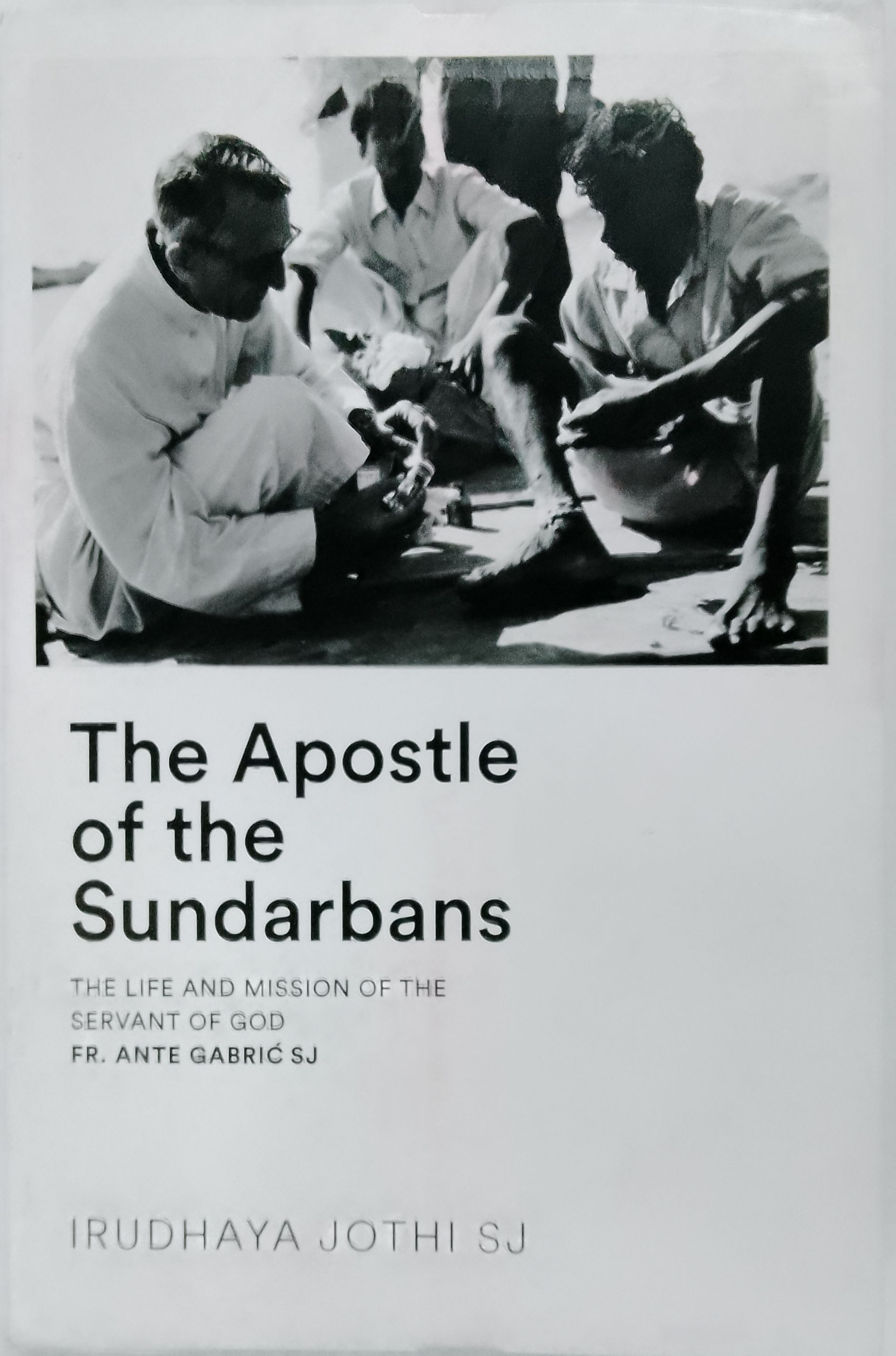
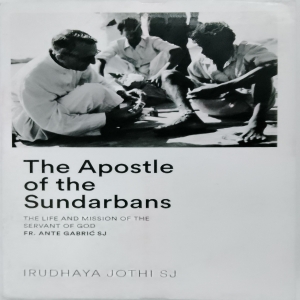
On February 28, 2025, Bishop Shyamal Bose of Baruipur released a book of great historical and missionary significance for the Church of Bengal, particularly the Baruipur Diocese. It's a book written by Jesuit priest Irudhaya Jothi (a well-known social activist) of Calcutta Jesuit Province. The book captioned "The Apostles of the Sunderbans" – The Life and Mission of the Servant of God Fr Ante Gabri? (1915-1988), was released at the Church of Our Lady of Lourdes, Kumrokhali (Mariapalli – Mary's Village), 24-Parganas South.
The dignitaries at the book release, besides Bishop Bose, were Bishop Emeritus Salvadore Lobo, author Fr Irudhaya Jothi, Fr Prolay Boidya, several other priests from Baruipur Diocese and delegates from Croatia (Metkovi?), where Fr Ante was born on February 28, 1915. Fr Mirko Nikolic SJ and Fr Irudhaya Jothi SJ are among the Vice-Postulators of Fr Ante's beatification process.
The 176-page biography vividly depicts the holiness and Spartan lifestyle of Fr Ante Gabri?, whom Mother Teresa (now St Teresa of Calcutta) hailed as the "living love of Jesus." Fr Ante's tomb at Maria Palli has become a place of pilgrimage, which people of all faiths visit to pray for his intercession. To Croatians and to the faithful of Baruipur Diocese, he's already a saint.
He set sail for India on October 20, 1938, at 23. On October 20, 1988, exactly fifty years later, he breathed his last at Mariapalli parish, which he had founded on January 20, 1975.
Earlier, during the inauguration of a two-day exhibition (February 16 and 17, 2023) on Father Ante Gabri? at Christ the King Church, Kolkata, Archbishop Thomas D'Souza had very aptly remarked, "Fifty years spent in the service of the people, nothing for self, everything for others." "He was a light to the Diocese of Baruipur. His life merged with Mother Teresa's," resonated Sister Mary Joseph – Superior General of Missionaries of Charity, at the same exhibition.
Interestingly, Provincial Franjo Jambrekovi?, who approved Fr Ante's mission to India, had earlier played a pivotal role in sending Gonxha Bojaxhiu (Mother Teresa) to her mission in India.
In 1978, Mother Teresa, during her address in Metkovi?, praised Fr Ante, "What Gabri? did in Bengal you should go there and see. It cannot be expressed by words. He brought Jesus into the hearts of many in Bengal. He brought Jesus and Mary to families who live a cheerful life now."
The cornerstone of Fr Ante's spiritual foundation and happy disposition was the daily family Rosary led by his mother. She taught her nine children to give up something during each meal and would say: "When you are thirsty, don't drink right away; wait a little." This virtue of self-restraint was the fulcrum of Fr Ante's 50-year missionary life in the cyclone-and-flood-prone Sunderbans.
Fr Ante was the epitome of the 'servant-leadership' exemplified by Jesus. He was well-known for his legendary pastoral care ("Tend my sheep" John 21:15-17). He always answered his flock's call for help 24/7 and delivered succour, even crossing rivers late at night.
He was a great social reformer, always looking to turn around hopeless situations into projects of mass welfare. He helped build roads, health centres, students' hostels, schooling for the underprivileged, college/university education, feeding the hungry and malnourished, church building and renovations, building convents for nuns and ensuring sustainable welfare of the downtrodden community. "He looked after every aspect of life—spiritual, material, and social," observed Fr Timir Singh - Editor of the Ordo and the Bengali Herald, Archdiocese of Calcutta.
This book highlights Fr Gabri?'s numerous pioneering initiatives to bring about socio-economic uplift of the downtrodden, irrespective of their religion, caste or creed.
There are also important testimonials (for Fr Ante's beatification) from bishops, provincials, priests and laypersons who witnessed his great works of service. It has been published by the Goethals Indian Library and Research Society, Kolkata. It is a must-read for all, especially those who aspire to priestly and religious life or social welfare services.
.jpg)
.png) Cedric Prakash
Cedric Prakash

.jpg) Elsa Lycias Joel
Elsa Lycias Joel
.jpg)
 A. J. Philip

.png) Jacob Peenikaparambil
Jacob Peenikaparambil
.jpg)
.png) John Dayal
John Dayal
.jpg)
.jpg)
.png) Joseph Maliakan
Joseph Maliakan
.png)
.png) Robert Clements
Robert Clements
.jpg) Cedric Prakash
Cedric Prakash

 ICPA
ICPA