

.png) Robert Clements
Robert Clements
.png)
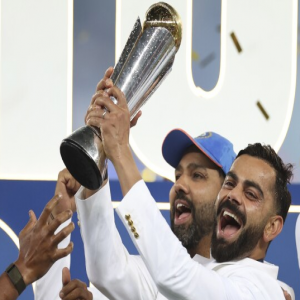
Ah, what a win that was! The streets were alive with cheers, people were dancing on balconies, and social media erupted with messages like, "We did it!" Of course, by "we," most of us meant "they" — the eleven chaps who actually played the game.
But that didn't stop us from claiming the glory, did it?
Now, while the whole country celebrated, our dear Prime Minister sent a congratulatory message to the victorious team. "Well done, boys!" he said, perhaps with a smile and a hint of pride. And rightly so — after all, our cricketers had shown grit, determination, and skill.
But if the PM had paused for a moment, I wonder if he'd realised why we won. You see, cricket isn't won by quotas or community-based selections. There are no "left-handed batsmen only" sections or "bowlers who speak Konkani" quotas. No batsman gets promoted because his uncle knows the coach. No bowler is picked because he once carried the captain's kitbag.
No, sir, it's all about merit, skill, and, yes — fitness!
Imagine if we applied cricket logic to the rest of the country. "Congratulations, Mr. Sharma, you're now the new CEO — not because you're competent, but because we needed a mustachioed man from Uttar Pradesh in senior management!" Or, "Well done, Raju, you've been promoted — not because you're good with numbers, but because we haven't had a Tamilian leading our accounts team yet!" Absurd? Of course! But that's how things often run outside the cricket field.
Cricket doesn't allow for such nonsense. Selectors aren't interested in who your grandfather was or what festival you celebrate. They care about your batting average, your strike rate, and your ability to field without resembling a startled chicken. Fitness tests are brutal. Fail one, and you're out — regardless of how many political connections you have.
Then there's teamwork. Cricket is no solo act. Cricket demands collaboration. The captain doesn't turn to a player from a particular community and says, "You can't bowl because you are not equal to the others." Oh no, the whole team is equal.
And the rules — oh, those beautiful rules! Cricket has them, and everyone follows them. The umpire's word is final, no matter how furiously you wave your bat or glare at him. Imagine that in our India, where the Constitution is followed, not dodged, where the law matters more than political ideology.
So, Mr Prime Minister, as you toast our cricket heroes, do remind the nation and yourself, that we won — not because of quotas, not because of political clout, and certainly not because of religious division — but because of merit, teamwork, and hard work.
Maybe, just maybe, if we played by those same rules in our governing and, yes, in Parliament, we'd have a winning streak that would put our cricket team's record to shame.
After all, the true Champions Trophy isn't just for cricket — it's for every Indian citizen, right, Captain?

.jpg) Stanislaus Alla
Stanislaus Alla
.jpg)
.png) Cedric Prakash
Cedric Prakash

.jpg) Elsa Lycias Joel
Elsa Lycias Joel
.jpg)
 A. J. Philip

.png) Jacob Peenikaparambil
Jacob Peenikaparambil
.jpg)
.png) John Dayal
John Dayal
.jpg)
.jpg)
.png) Joseph Maliakan
Joseph Maliakan
.png) Robert Clements
Robert Clements
.jpg) Cedric Prakash
Cedric Prakash