

.png) Jaswant Kaur
Jaswant Kaur
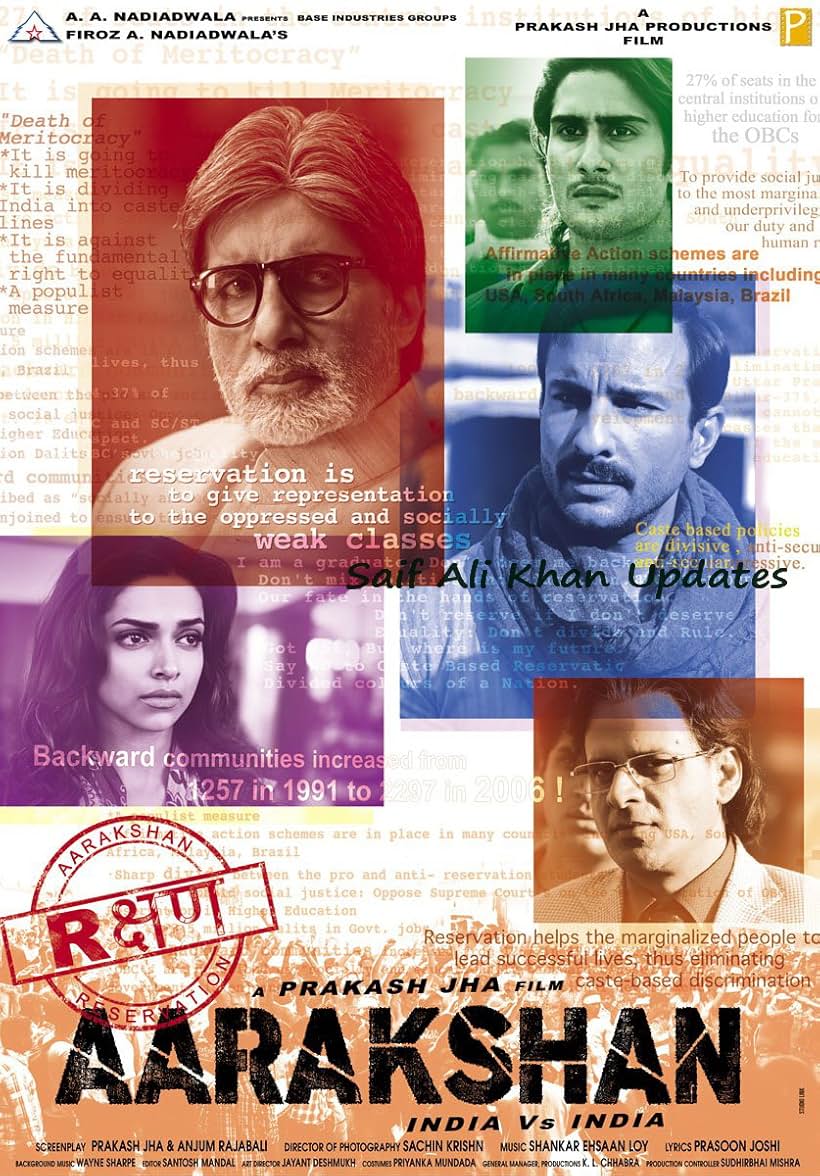
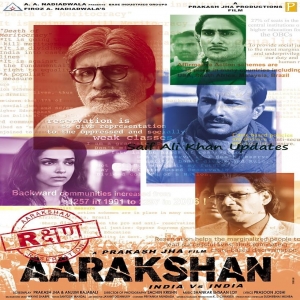
Seventy-five years have passed since our country first adopted the Constitution, with a pledge that we have read umpteen times—probably more than any other document. Beginning with school textbooks, we have interacted with various articles of the Constitution countless times in various ways. Several movies have also been made showcasing the importance of these provisions. From Aarakshan (2011) to Article 15 (2019) to Jolly LLB (2013) to Satyagraha (2013), and many more, these movies have delved into issues ranging from caste-based discrimination to the right to freedom of speech and ex
Over the years, there have been several instances where these provisions were violated with impunity. Be it the Emergency, Operation Blue Star, the Gujarat riots, the Manipur violence, and so on, everyone looks up to justice based on our constitutional values. However, in most cases, justice comes at its own pace.
Every time we witness one of these incidents, we express our shock, perhaps amongst the closest of our friends or inner circles. But is this all that is expected of us?
The recent parliamentary debate has once again brought the sanctity of India's Constitution and the legacy of Dr BR Ambedkar into sharp focus. It was heartening to see both the government and the opposition arrive at a consensus to hold a two-day discussion in Parliament on the Constitution's journey. As expected, the debate sparked heated arguments, with each side pointing fingers at the other, accusing them of violating constitutional values and principles during their respective regimes.
However, what made headlines was the controversy surrounding Home Minister Amit Shah's remarks on Ambedkar. Nationwide protests erupted, demanding the minister's resignation. Be that as it may, this underscores a broader and more troubling issue: the growing disconnect between the ideals enshrined in the Constitution and the actions of those entrusted with its protection. While leaders across the political spectrum frequently invoke Ambedkar's name, their actions often betray the very principles he stood for.
At a time when the country was facing a larger issue of bringing everyone together and binding each other in the spirit of one nation, Ambedkar's vision extended far beyond his time. He was not merely the chief architect of the Indian Constitution but also a thinker, philosopher, and revolutionary.
For Ambedkar, the Constitution was a living document—a tool for dismantling social hierarchies and creating a just and equitable society. It was designed to uphold justice, liberty, equality, and fraternity in a nation fractured by caste, class, and communal divisions. Yet, in today's India, he has been reduced to a mere symbol—invoked selectively for political gain while his principles are either neglected or deliberately undermined.
The discourse around Ambedkar has often been hollow. Political leaders tend to confine his legacy to ceremonial commemorations instead of engaging with his ideas on caste annihilation, economic redistribution, and social justice. This not only trivialises his contributions but also diverts attention from the urgent need to address the deep-rooted inequalities he sought to eradicate.
The parliamentary debate on the Constitution further exemplifies this disconnect. Regardless of party affiliation, politicians have often taken the Constitution for granted, using it as a shield or disregarding its principles at their convenience.
From the violence that erupted during the Partition to the systemic oppression of Dalits, Adivasis, and women, the ideals of justice and equality have often been ignored in practice. The atrocities faced by the marginalised communities are not isolated incidents; they are part of a larger systemic failure to address entrenched discrimination. Ambedkar's warnings about the dangers of majoritarian dominance remain as relevant today as they were in the mid-20th century.
The recent remarks by an Allahabad High Court judge that the decisions of the majority community will prevail in this country not only revalidate those concerns but also raise a pertinent question: Are we reading the Constitution merely as a book to complete a law degree or to get a particular job? If our judges, parliamentarians, educators, and law enforcement agencies do not understand the relevance of constitutional values, how can we even think of a Viksit Bharat?
No wonder caste-based violence, discrimination, and exclusion persist. Those in power wield their own swords against the powerless to have their say. The Human Rights Measurement Initiative (HRMI) shows that civil and political rights violations continue to be a pressing issue in India. Of the two categories of civil and political rights, India's summary score for the five physical integrity rights—i.e., the right to be safe from the state—is 3.8 out of 10.
The score for the right to be free from arbitrary arrest is also 3.8 out of 10, the lowest in this category. This is followed by 3.9 out of 10 for freedom from torture and ill-treatment. The scores for extrajudicial execution and forced disappearance are 4.6 and 5.6, respectively.
The survey conducted by HRMI has "identified socio-economically disadvantaged people; people from Dalit, Adivasi, and other tribal communities, especially women and girls; people from minority communities; migrants and refugees; internally displaced people; and homeless people, especially children, among others, to be at risk of being unable to enjoy these rights."
Not only this, but it also shows that "people from particular religious beliefs and practices, human rights advocates, people from oppressed castes, protestors, people from tribal communities, journalists, and political opponents" are highly vulnerable to state-inflicted violations of rights!
This highlights how far we as a country still have to go to achieve Ambedkar's vision of an egalitarian society. Laws designed to protect national security have been misused to suppress dissent and target activists. Freedom of speech, a cornerstone of democracy, has come under severe strain, with journalists, artists, and ordinary citizens facing legal and social persecution for expressing dissenting views. It has become normal to shut down communication, block internet access, and use other forms of censorship to stifle the flow of information.
Furthermore, the constant weakening of public institutions meant to safeguard democracy and judicial independence has thrown our values and democratic ethos to the wind. Our policies and actions have consistently alienated religious and caste minorities and normalised hate speech and divisive politics, eroding the social fabric Ambedkar sought to strengthen.
The ongoing challenges to constitutional values threaten not just Ambedkar's legacy but the very foundation of India's democracy. The parliamentary debate might not have served any purpose, but it has once again revealed the true faces of those who seek our precious votes and support during elections.
Ambedkar warned against hero-worship in politics, cautioning that blind faith or loyalty to leaders could undermine democracy. This is exactly what is happening today. His words should remind us of the responsibilities that come with citizenship in a democratic society.
It is not enough to participate in elections or celebrate Ambedkar on commemorative days; as citizens of this country, we must actively engage with the issues that threaten our Constitution's integrity. That seems to be the only way forward.
.jpg)
.png) Cedric Prakash
Cedric Prakash

.jpg) Elsa Lycias Joel
Elsa Lycias Joel
.jpg)
 A. J. Philip

.png) Jacob Peenikaparambil
Jacob Peenikaparambil
.jpg)
.png) John Dayal
John Dayal
.jpg)
.jpg)
.png) Joseph Maliakan
Joseph Maliakan
.png)
.png) Robert Clements
Robert Clements
.jpg) Cedric Prakash
Cedric Prakash

 ICPA
ICPA