

.jpg) Vidya Bhushan Rawat
Vidya Bhushan Rawat
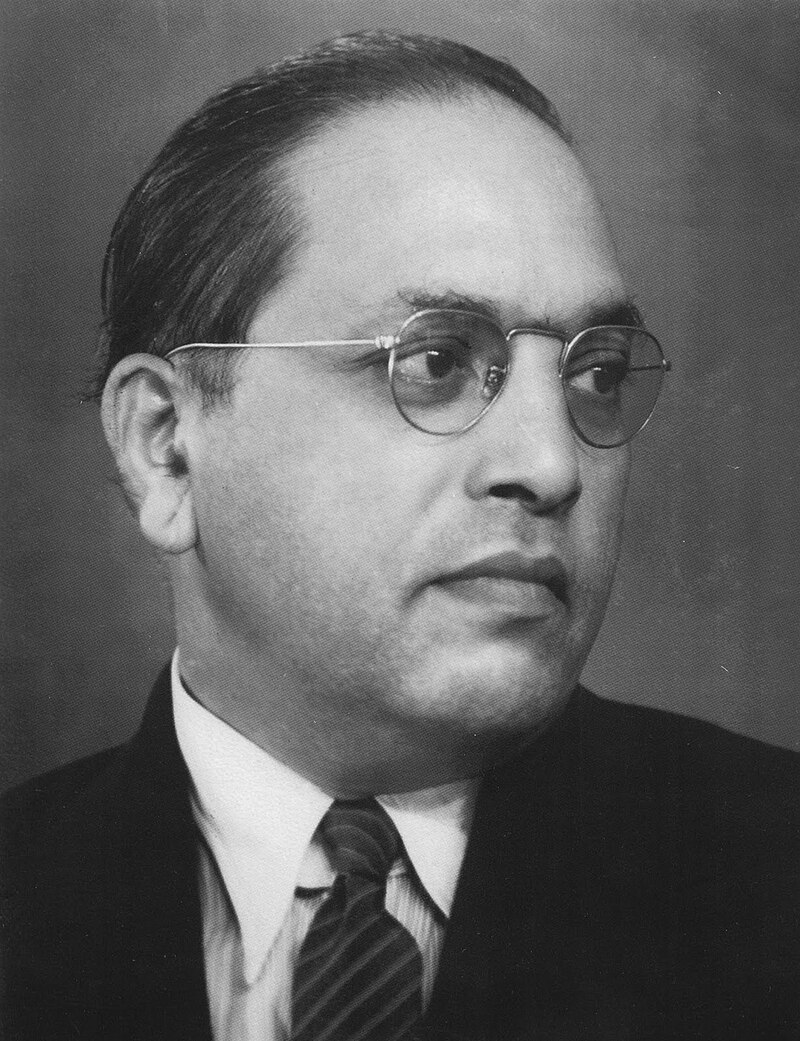
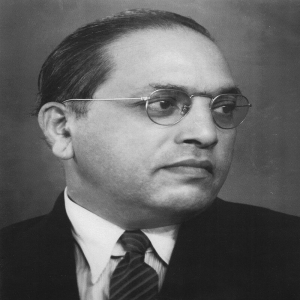
Dr Ambedkar remains the liberator and emancipator of all the oppressed communities of India, and those who are trying to fix him between two Brahmanical parties are actually doing so at their convenience. The fact is that the statement made by Amit Shah, the Union Home Minister, in the Rajya Sabha was highly objectionable, to say the least. It is the language that people unhappy with the growing assertion of Dalits speak whenever they grow frustrated with such a show of power.
Secondly, we don't care for gods and goddesses as the entire premise of Dr Ambedkar's philosophy was that 'religion should revolve around the concern for human beings' and not for the 'happiness' of the 'god.' As Buddha said, human philosophy should concern the welfare of human beings, which was the principle that C?rv?ka had, too. So Baba Saheb's real fight was not against Congress or BJP but against the Brahmanical Social Order. Please understand that there were people who stood up against it, and there were those who supported the casteist BSO in all the parties.
Now, we need to understand that the Constitution-making process was the biggest effort of reconciliation in Indian society. Baba Saheb Ambedkar understood this very well, as did the Congress leadership at that time, particularly Nehru.
We must understand that Dr Ambedkar and the Congress Party had different pathways and opinions but joined hands to rebuild India. Interestingly, Dr Syama Prasad Mookerjee, the leader of Bhartiya Jan Sangh, was part of this. They had serious differences, but none called each other anti-national or inferior. They debated in Parliament and agreed to frame the Constitution, which could be considered one of the finest documents that strengthen our unity.
Unfortunately, selective quoting and references of events have harmed our polity today. It is essential for all of us to not use the events and differences of that time for our political purposes. Congress was an umbrella organisation for all those who fought for our freedom. After independence, many of these organisations actually formed their own parties and groups, and naturally, they became political rivals, too. So it does not matter, as India was a free nation, and we needed different checks and balances, political parties, and leaders.
Both Dr Ambedkar and Syama Prasad Mookerjee were part of Jawahar Lal Nehru's Cabinet. When Gandhiji was murdered on January 30, 1948, even Syama Prasad Mookerjee dissociated from the Hindu Maha Sabha and remained in the Cabinet. None asked him to resign. His resignation came in 1951 after he became President of Bhartiya Jan Sangh. The resignation was based on the Nehru-Liaquat Pact. Nehru, Ambedkar, and Mookerjee were members of the same constituent assembly and Cabinet, and I am sure, despite their political differences, they must have been good friends and had respect for each other. That was a different time.
There are a whole lot of issues which need comprehensive analysis and not selective usage. Baba Saheb was unhappy about Nehru's inability to pass the Hindu Code Bill in Parliament. Still, he knew well that it was not easy for him as prominent leaders of Congress and Jan Sangh were opposed to the Hindu Code Bill. Notable among those who were deadly opposed to the Hindu code bill were Dr Rajendra Prasad, Pattabhi Sitaramayya, KM Munshi, Purushottam Das Tandon, Dr Syama Prasad Mookerjee and various leaders of the Jan Sangh and Hindu Maha Sabha etc. Sardar Patel was in the middle, though he leaned towards those who opposed it. So, in terms of ideological unity, only Nehru and Ambedkar wanted this progressive legislation to be passed.
As I said, all these leaders were highly knowledgeable and respectful of each other. None questioned the integrity of others, but they put forth their political points very powerfully. While Nehru's credentials as a secular modern progress nationalist were never questioned, Ambedkar and Mookerjee actually raised the issues of the safety of Hindus and other minorities in Pakistan, which was not out of the box and was real.
Dr Baba Saheh Ambedkar fought his Lok Sabha elections from North Bombay and Bhandara on two different occasions and lost. Congress ensured his defeat, no doubt. As I said, they were political rivals. Who was responsible for making Baba Saheb's secretary fight against him? Nehru? Perhaps Praful Patel can provide an answer as his father was an influential leader of the Congress, and possibly many Ambedkarites can give details on his work.
Secondly, in the North Bombay seat, not only the Congress but also the Communist Party of India and Jan Sangh fielded candidates.
There is no doubt that Congress's history in the subsequent years was in continual denial of Dr Ambedkar's legacy. However, one must remember that Baba Saheb used to call Congress the original Brahmanical party of India. What would he have said about BJP in today's time, perhaps the main Brahmin Bania party of India? This is the reality.
Now, the question is not who loves Dr Ambedkar and who does not. Who gave him the Bharat Ratna? Certainly not the BJP. VP Singh, another hero vilified by both the Congress and the Sanghis, gave the Bharat Ratna to Dr Ambedkar. VP Singh also provided the reservation to Neo Buddhists, installed a big portrait of Baba Saheb in Parliament, published his book through the Ambedkar Foundation, declared Baba Saheb Jayanti a national holiday, and many more. Unfortunately, Congress and the BJP, which supported the National Front government headed by VP Singh from outside, decried it.
Recently, an arrogant Brahmin spokesperson of the BJP abused VP Singh, terming him Samanti or feudal. Frankly, the only other person who was active in those days and worked on spreading Baba Saheb's thoughts was one of VP's most trusted colleagues, the late Ram Vilas Paswan.
Let us not debate how big a memorial you make for Dr Ambedkar or how much you worship him. My simple question for political leadership today is: If you really believe in Dr Ambedkar's ideology, then please implement the Constitution in its true spirit. Please implement land reforms, redistribute land to the most marginalised, ensure free health services and the right to education for all, stop the privatisation of our natural resources, and implement reservations in their true spirit everywhere.
It is equally important to understand that Dr Ambedkar should not be confined to merely Constitution-making alone because that way, you can actually see his historical role in critiquing Brahmanical Hinduism. Yes, he critiqued all the Brahmanical texts, gods, and everything. That apart, if we believe his philosophy, then let us respect what he asked his followers at the historical Deekshabhoomi grounds in Nagpur on October 14, 1956, Dhammachakra Pravartan Diwas, in his 22 vows to follow the path of humanism, as defined by Lord Buddha.
In the true sense, if we really care for Dr Ambedkar's view, please stop telling us how you respect Samvidhan or how much land you have allocated to make his statue rather than redistributing land to landless people, which has now been forgotten. Ensure free quality education and qualitative health care for all equally.
We need an inclusive governance structure that reflects our diversity and allows each of us to express our opinions without fear or intimidation. Dr Ambedkar's India will not be the model where regressive religious pontiffs lead us to the path of destruction but where progressive humanist leaders take us to enlightenment. It is time the state ensured welfare measures for the millions of oppressed Dalits, Adivasis, backward classes and people from all ethnicities and religious identities in our decision-making process.
.jpeg)
 A. J. Philip
.jpg)
.png) Jacob Peenikaparambil
Jacob Peenikaparambil
.jpg)
.png) John Dayal
John Dayal
.jpg)
 Pachu Menon
.jpg)

.png)

.png)
.png) Robert Clements
Robert Clements
.jpg)