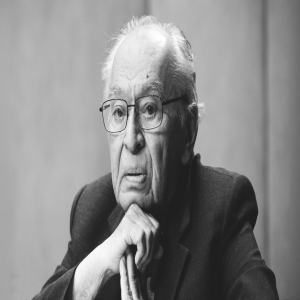


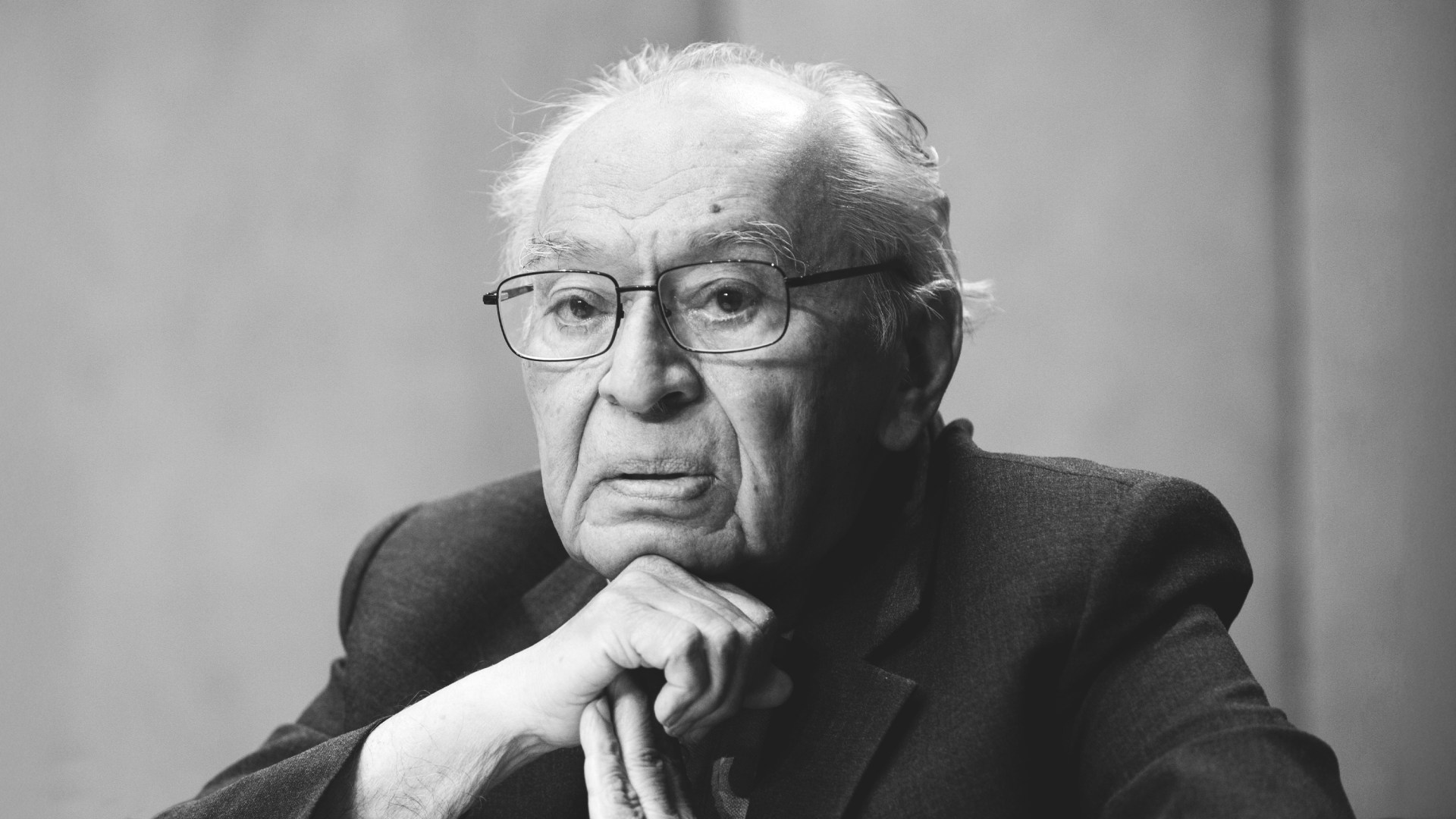
The visionary Gustavo Gutiérrez, revered and known as the Father of Liberation Theology, passed away at 96 on October 22, 2024, leaving an enduring legacy in Catholic Social Teaching. His vision of a Church grounded in empathy, justice, and solidarity with the poor redefined Catholic thought, elevating what was once considered radical to a core principle of the faith. Gutiérrez embodied an active faith engaged with the struggles of the marginalised, urging the Church to preach the Gospel and live it through action. His commitment to the poor and his advocacy of the "preferential option for the poor" has doubtlessly inspired many to adopt a compassionate, justice-oriented approach to their beliefs. The whole Christian world pays tribute to and honours Gutiérrez's steadfast commitment to the Gospel's call for social justice and his significant impact on the Church's mission.
Gustavo Gutiérrez was born on June 8, 1928, in Lima, Peru, to a family of mixed Spanish and Indigenous heritage. Growing up in an impoverished neighbourhood, he witnessed firsthand the challenges of poverty and inequality—experiences that profoundly influenced his theological vision. As a child, he struggled with osteomyelitis, a severe bone infection that kept him homebound for years. This period of isolation not only deepened his empathy for the suffering of others but also ignited his passion for intellectual and spiritual exploration.
Interestingly, Gutiérrez embarked on his academic journey by studying medicine and literature in Peru, followed by psychology and philosophy in Leuven. After studying medicine and literature in Peru, he pursued further education in psychology and philosophy at Leuven, ultimately earning a doctorate from the Institut Catholique in Lyon. Gutiérrez initially planned to become a psychiatrist but felt a call to the priesthood.
Father Gutiérrez, believing that true love for God is expressed through love for one's neighbour, stated, "Only then will God be with us." Following the example of Jesus in the Gospels, who lived among society's outcasts, Gutiérrez dedicated much of his life to serving the poor in the Rímac neighbourhood of Lima, Peru. As a parish priest and director of the Bartolomé de Las Casas Institute, he provided pastoral care to impoverished people. His time in Rímac profoundly shaped his understanding of poverty, seeing it as a form of evil that affects both the economic and spiritual aspects of life.
His seminal work, "A Theology of Liberation: History, Politics, Salvation" (1971), articulates his understanding of Christian poverty as an act of compassionate solidarity with the poor and a powerful protest against the injustices of poverty. As a pivotal figure in the emergence of liberation theology, he devoted much of his life to living and working alongside the poor in Lima. In September 1984, the Vatican convened a special assembly of Peruvian bishops intending to condemn Gutiérrez, but the bishops chose to stand by him.
Gutiérrez has authored several other significant works, which have been translated into multiple languages beyond English. These texts address various themes, including spirituality and Latin American history, and include titles such as "We Drink from Our Own Wells: The Spiritual Journey of a People," "On Job: God-Talk and the Suffering of the Innocent," "The Truth Shall Make You Free," "The God of Life," and "Las Casas: In Search of the Poor of Jesus Christ." His essays have appeared in esteemed publications, including Theological Studies, La Revista Latinoamericana de Teología, and Páginas. In addition, Gutiérrez has made significant contributions to the international journal Concilium, where he served on the board of directors.
Challenging the traditional Church view that salvation is only found in the afterlife, Gutiérrez proposed that liberation from poverty could also be achieved in this world. He believed that knowing God requires active efforts to combat poverty and injustice here on earth. For him, the Church's mission must extend beyond spiritual matters to address real-world suffering. His concept of a "preferential option for the poor" emphasised confronting poverty as an evil to be eradicated rather than idealising it.
In a 2016 interview with America, a Jesuit publication, he described poverty as a condition that renders people invisible and often results in premature and unjust deaths. In recent years, as we all know, Father Gutiérrez's theology has gained the support of the official magisterium from the start of the Francis' papacy. The Pope had once invited him to a meeting at the Vatican in 2013 and acknowledged gratefully the importance of liberation theology in L'Osservatore Romano, the Vatican's unofficial newspaper, stating that it should no longer "remain in the shadows to which it has been relegated for some years, at least in Europe."
According to Gutiérrez, true "liberation" encompasses three key aspects: First, it includes socio-political liberation to address the root causes of poverty and injustice. Second, it involves empowering the poor, marginalised, and oppressed, freeing them from constraints that hinder their ability to grow with dignity. Third, liberation theology emphasises freedom from selfishness and sin, fostering a renewed relationship with God and others. Fr Gustavo's life offers a wealth of insights for today's generation, emphasising the importance of solidarity, active faith, courage, holistic liberation, and humble service.
Solidarity with the marginalised is a central theme in Gutiérrez's teachings. He challenges us to place the needs of the marginalised and oppressed at the heart of our efforts, encouraging empathy and a commitment to building a more just and equitable society. His message is a call to stand with those who are most vulnerable and ensure that their voices are heard.
Faith in action is another core lesson from Gutiérrez's life. He believed that faith should not remain confined to personal spirituality but must engage directly with the realities of social injustice. Gutiérrez's example serves as a potent reminder to translate our beliefs into concrete actions, working towards solutions that alleviate poverty and challenge inequality. It is a vision of faith that seeks to make a tangible difference in the world.
Gutiérrez's unwavering advocacy for the poor, even in the face of formidable opposition, was a testament to his courage in confronting injustice. Despite personal risks, his determination to stand by those oppressed is a powerful inspiration, demonstrating the strength required to address deep-rooted injustices. Gutiérrez's courage serves as a beacon, inspiring us to speak out against inequality, regardless of the challenges we may face.
A Holistic View of Liberation further enriches Gutiérrez's legacy. He understood liberation as simultaneous spiritual and material processes, emphasising the need to address systemic barriers hindering human potential and spiritual well-being. This approach promotes a deeper understanding of human dignity, encouraging us to see liberation as a comprehensive process that includes social, economic, and spiritual dimensions.
Humility and service are perhaps most clearly reflected in Gutiérrez's choice to live simply and serve among the poor in Lima. His life demonstrates the power of being present with those we aim to help, embodying humility and a deep commitment to others. It reminds us that authentic leadership is grounded in service to those in need, particularly the most vulnerable in our communities.
These insights from Fr Gustavo Gutiérrez's life indeed remain a great source of inspiration and even confrontation to our present generation to embrace a faith that is not only merely 'loving' – a pious sentimental feeling, but a faith that is shown in our 'active' and 'effective' love that makes one actively engaged in promoting justice and inclusion. His legacy encourages a vision of faith deeply connected to social responsibility, offering a model for building a more humane and just world. His legacy will resonate, reminding us that true discipleship involves standing with those in need and pursuing a just society. As the Church celebrates his memory, she also embraces the transformative vision he imparted—a vision that will continue to inspire future generations.
.jpg)
 A. J. Philip
.jpg)
.png) Jacob Peenikaparambil
Jacob Peenikaparambil
.jpg)
.png) Jaswant Kaur
Jaswant Kaur
.jpg)
.png) Joseph Maliakan
Joseph Maliakan
.jpg)

.png)
.png)
.png) Robert Clements
Robert Clements
.jpg)
.jpg) Thomas Menamparampil
Thomas Menamparampil
 Jacob Peenikaparambil