
.png) Peter Fernandes, SFX
Peter Fernandes, SFX
Albert Einstein said, "The hardest thing to understand in the world is the income tax." However, it is a divine mandate to pay taxes, "Give to Caesar what belongs to Caesar," for the reason that it upholds human nature and the common good. Humans, by nature, are social and political beings. Hence, all have to actively participate in the well-being and growth of human society. Because it is imperative for humans to live in a civilised world for their own welfare, to develop their potential, and to reach their highest aspiration, collecting taxes is one of the most important components for an organised society to be viable and progressive.
From time immemorial, humans have crafted different modes to levy taxes on citizens and various methods to collect them. For any government, upholding the common good is its highest goal and value. Consequently, the government collects taxes to provide it with funds to run the country, pay salaries and pensions to government officials, maintain infrastructure such as roads and healthcare, and, most importantly, cover defence expenses to guard the country's borders. Sadly, when there is income tax, the just man pays more, and the unjust pay less on the same amount of income.
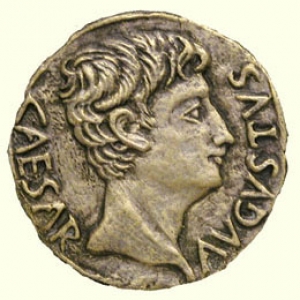
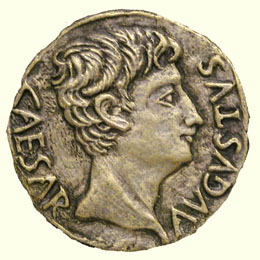
We know for certain that it is a divine mandate to pay taxes, and even Jesus complied with this regulation. The leaders asked Jesus, "Teacher, we know that you are a man of integrity. Is it right to pay the imperial tax to Caesar or not. But Jesus knew their hypocrisy. Bring me a denarius and let me look at it. Whose image is this? "Caesar's," they replied. Then Jesus said to them, give back to Caesar what is Caesar's". Someone rightly said, "Taxation is the price which civilised communities pay for the opportunity of remaining civilised."
The nation wants to know why there is a failure when the government collects enough revenue to provide its citizens with adequate roads, bridges, railways, airports, and basic amenities like clean water and sanitation. A lack of proper infrastructure and a failure to execute government-sanctioned projects effectively is a matter of grave concern. Because it is a divine mandate, does it mean that citizens have no right to challenge the government for an unjust tariff and misuse of the same? Citizens are duty-bound to question and challenge the government on all counts, especially the use of taxpayers' money. The government holds authority only to ensure the common good and not for its own welfare.
Recently, actor Prakash Raj, in a satirical tweet, warned people to avoid public infrastructure while enjoying the rain. He mentioned, "Monsoon warning; don't go near airports, buildings, or trains inaugurated after 2014." Monsoons exposed the truth for all to behold: the abysmal state of newly constructed or hot mixed roads and bridges. Ironically, with much fanfare, the Prime Minister likes to inaugurate public projects, but he absconds when the same projects fail. The name of this game is corruption and mismanagement, which is very pervasive in India's infrastructure development.
Funds allocated for infrastructure projects sometimes find their way into the wrong pockets, leading to substandard work or incomplete projects, which cause loss of life and property. The waste of taxpayers' money not only undermines the nation's progress but also dehumanises the vulnerable in society. Can an emerging economic giant excuse itself for a lack of proper infrastructure? The failure to ensure safety reflects a deeper societal issue where human life is not given the priority it deserves. Should we still honour the mandate "Give to Caesar what belongs to Caesar?"
Not too long ago, electoral bonds shook the nation with a seismic shift in the political landscape. Implications are far-reaching and beyond the comprehension of ordinary citizens. The ruling party sumptuously avails itself of huge sums of money in the form of electoral bonds, thus creating a huge political vacuum and disparity in the playing field for political campaigns. Besides, poaching rival MPs and MLAs is their daily bread and butter. The votes and taxpayers are unaware they are paying for their political demise.
The business tycoons get government projects—milking cows—and they feast on them luxuriously without minding the pain and agony that causes the taxpayers, mostly the poor. The layers of deception are insurmountable, and the taxpayer ultimately shoulders the burden of this scandalous truth without their fault. People wonder why, in India, we have to pay such a high price for everything, especially the essential commodities.
The electoral bond shows its ugly face every time we make any kind of purchase and pay the bills. Check out this smart scam. The government mandates all states and power generator companies in India to buy at least 10% of imported coal from Adani Group, which will supply coal at 10 times the cost of domestic coal. It has ripple effects. The poverty index is ever-widening. India overtook Nigeria as the world's poverty capital. India has surpassed Nigeria as the nation with the highest number of impoverished people, from 73 million in 2018 to 83 million in 2022. In contrast, Nigeria had 87 million poor people in 2018 and 70 million in 2022. Why should citizens "Give to Caesar what belongs to Caesar?"
When the government is hand-in gloves with the business tycoons, the common citizens are trampled upon without care or concern. An opposition leader once described GST as the Gabbar Singh Tax, and rightly so for many reasons, which the nation and ordinary citizens are finding out on a daily basis. Rising unemployment and uncontrolled inflation have put a lot of strain on every household, which makes the 'Gabbar Singh Tax' also the 'Grihasthi Sarvnaash Tax,' as Rahul Gandhi had projected. Look at BSNL and the exponential rise of Jio. It's not rocket science. Even the common folk can decipher the foul play by the present dispensation to enrich their partners in crime and squander taxpayer money, only to be entertained at a "Big Fat Wedding."
Indeed, there should be healthy market competition to benefit the common man and not otherwise. The government of the day should create an ecosystem for businesses to thrive by setting up a level playing field for investment and not creating crony capitalism. The rise of crony capitalism and unbridled corruption in government makes giving to Caesar undesirable.
Paying taxes is noble and patriotic; cheating on taxes makes one felonious. It is a fact that the income tax created more criminals than any other single act of government. For that reason, it is a huge responsibility of the government to levy fair taxes and use the taxpayer's money honestly for the common good. And it would be fair. Everyone will pay taxes equitably, and it will eliminate tax cheaters and corporate shenanigans. A fine is a tax for doing something wrong. A tax is a fine for doing something right. Jesus, despite being free from that obligation on technical grounds, agrees to pay the temple tax, "Give to Ceasar what belongs to Ceasar."
.jpg)
 A. J. Philip

.png) Jacob Peenikaparambil
Jacob Peenikaparambil

.jpg) Renjith Leen
Renjith Leen

.jpg)


.png)
.png) Robert Clements
Robert Clements

.jpg) A. J. Philip
A. J. Philip