

.jpg) Don Aguiar
Don Aguiar

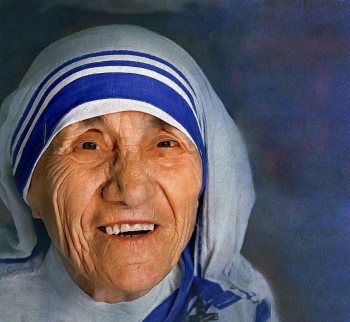
Mother Teresa went to Ireland in 1928 to join the Sisters of Loretto at the Institute of the Blessed Virgin Mary and sailed six weeks later to India, where she taught for 17 years at the Order's school in Calcutta (Kolkata). From 1937 to 1948, Mother Teresa taught at Loreto St Mary's School. She was appointed headmistress of the school in 1944. A teacher of geography, she was so fluent in Bengali that she taught with ease in the school that used Bengali as its medium of instruction.
What does Mother Teresa teach us?
We must each strive to be the best at what we are gifted at, and that is making something beautiful for God. The greatest poverty is being unloved, which means both the materially rich and poor know and experience it. She believed that everyone deserved to be loved.
She was a great teacher and role model because she did so many things to improve the lives of others including dedicating her life to helping people in need. Mother Teresa is a deserving hero because of her acts of selflessness, dedication, and compassion towards the poor AND always put others before herself.
She is an ultimate example of transformational leadership, a model for helping others aspire to, and attain high levels of performance for themselves and the organization. Transformational leadership is a type of leadership style that leads to positive changes in those who follow.
If CEO’s/COO’s or Managing Directors or even the Christian associations, Clergy and religious were to model themselves after Mother Teresa’s leadership style they will find her to be a very good teacher & an inspiring success story. All the traits that the modern corporate world seeks in a business head she possessed in plenty.
Mother Teresa had clarity in vision, ambition, determination, a never give up attitude and the ability to inspire others to participate in her vision. She was empathetic, a good communicator, brave, bold and a good listener who was quick to adapt to change.
If we were to pen down her achievements & the length of her career (if I may take the liberty of using this word in reference to her work) she beats all popular business bigwigs or Church leaders based on the conventional corporate or evangelisation measurements of success, namely:
* Shareholder gains.
* Increase in market share.
* Growth of the organization.
* Employee satisfaction.
* Social impact.
In addition to the above, she built a brand so strong that not only did it become internationally recognized in less than two decades but the brand legacy continues to get stronger as time passes.
The only bone of contention in this thought process would be the absence of the word “profit”. She did not make profit like how corporate leaders do for their organizations, some may argue. To this I would say that she did but with a shift in paradigm.
Her success did not lie in how much profit she earned from the world but how much the world profited from her.
.jpg)
.png) Cedric Prakash
Cedric Prakash

.jpg) Elsa Lycias Joel
Elsa Lycias Joel
.jpg)
 A. J. Philip

.png) Jacob Peenikaparambil
Jacob Peenikaparambil
.jpg)
.png) John Dayal
John Dayal
.jpg)
.jpg)
.png) Joseph Maliakan
Joseph Maliakan
.png)
.png) Robert Clements
Robert Clements
.jpg) Cedric Prakash
Cedric Prakash

 ICPA
ICPA