
.jpg) Steve Gibson Rodrigues
Steve Gibson Rodrigues

Christmas is the time to celebrate Jesus’s birth, representing joy, hope and peace. While the air reverberates with carols and festive cheer, a chilling echo resonates in the cries of Palestinian children, unfolding a stark parallel reality in the Holy Land. Children, the innocent and the vulnerable have once again become the victims of violence, echoing the tragedy of the Holy Innocents massacred by Herod. Today, the land where the Messiah once walked is marred by conflict due to the Israel-Hamas war casting a gloomy shadow on the season of joy.
The news of the birth of Jesus was as good as a threat to King Herod. Hence, the birth of the Messiah, a beacon of hope and peace, was tragically stained by the blood of innocent children just because of Herod’s paranoia. In parallel, since the wake of the war between Israel and Hamas, thousands of lives have been destroyed mercilessly, children being the prime victims. According to the UN, more than 8000 children have been killed so far, besides women and others. The threat calls received by the Israeli authorities have claimed thousands of young lives, crushing their dreams even before they have a chance to bloom. It is no doubt that a part of the Holy Land (Gaza) has turned into a graveyard for children.
The massacre of innocents in Bethlehem, as well as in Palestine, is a stark reminder of the human capacity for cruelty. Herod’s mass murder was driven by his fear of losing his throne. He saw the newborn Jesus as a threat to his power and authority. Similarly, the Israeli authorities today are motivated by a sense of insecurity and fear. They perceive the Palestinians as a threat to their existence and are willing to use brute force to maintain control. In the bargain, the plight of the parents who lost their children is deplorable. Their homes feel empty, their laughter silenced, and their tears flood the barren Gaza desert.
Israelites’ fears are understandable, but they are self-destructive as well. It leads to the dehumanization of the “other” and creates a climate of suspicion and hatred. It is this fear that ultimately fuels the cycle of violence and makes peace seem impossible. When will we begin to be guided by love? When will we stop looking at our fellow human beings as threats and treat them respectfully? When will we start building bridges instead of walls? It is in our hands either to perpetuate violence or break the vicious cycle of violence.
Despite decades of international involvement and negotiations, the Israel-Palestine conflict prevails, leaving a trail of human suffering. No matter how massive the humanitarian aid operation has been, it is undeniable that, as an international community, we have collectively fallen short. The veto by the US in the UN Security Council on a resolution calling for an immediate ceasefire and protection of civilians has frustrated the hope of the World Body (UN) to bring about harmony. This inaction serves only to fuel the flames of conflict and prolong the suffering of innocent lives.
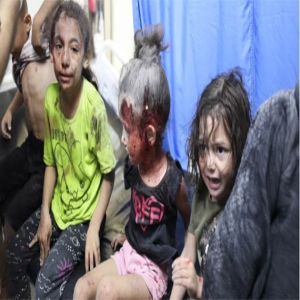
Looking at the images of Palestinian children surfacing over the internet, one can see their eyes filled with the same terror that haunted the innocents of Bethlehem two thousand years ago. Their cries call for a Messiah. Jesus was one among the few children who escaped the brutal slaughter ordered by Herod. It took nearly 30 years for the Messiah to emerge. Today, the Holy Land has once again lost thousands of innocents, yet there are undoubtedly some who have managed to escape the grasp of death.
And so, we must ask ourselves: will a Messiah rise again? Perhaps not immediately or in the form of a single divine figure, but in the collective action of all who stand up for what is right. Maybe in the voices raised against injustice, in the hands reaching out to help one another, in the hearts filled with compassion and empathy, which the children and people in Palestine need.
Let this Christmas give rise to many Messiahs so that the echoes of Bethlehem no longer resonate with sorrow but with the joyful sounds of peace.

.jpg) Stanislaus Alla
Stanislaus Alla
.jpg)
.png) Cedric Prakash
Cedric Prakash

.jpg) Elsa Lycias Joel
Elsa Lycias Joel
.jpg)
 A. J. Philip

.png) Jacob Peenikaparambil
Jacob Peenikaparambil
.jpg)
.png) John Dayal
John Dayal
.jpg)
.jpg)
.png) Joseph Maliakan
Joseph Maliakan
.png)
.png) Robert Clements
Robert Clements
.jpg) Cedric Prakash
Cedric Prakash