


.png) Stan Swamy
Stan Swamy

During the past three decades I have tried to identify myself with the Adivasi People and their struggle for a life of dignity and self-respect. As a writer I have tried to analyze the different issues they are faced with.
In this process I have clearly expressed dissent with several policies, laws enacted by the government in the light of the Indian Constitution. I have questioned the validity, legality, justness of several steps taken by the government and the ruling class.
1. I have questioned the non-implementation of the 5th Schedule of the Constitution [Indian Constitution, Article 244(1)] which clearly stipulates that a ‘Tribes Advisory Council’ (TAC) composed solely of members from the Adivasi community who will advice the Governor of the State about any and everything concerning the protection, well-being and development of the Adivasi people in the State.
2. I have asked why the Panchayats (Extension to Scheduled Areas) Act [PESA], 1996 [No:40 of 1996] has been neatly ignored which for the first time recognized the fact the Adivasi communities in India have had a rich social and cultural tradition of self-governance through the Gram Sabha.
3. I have expressed disappointment at the silence of the government on Samatha Judgment, 1997 of the Supreme Court [Civil Appeal Nos:4601-2 of 1997]. The judgment was meant to provide some significant safeguards for the Adivasis to control the excavation of minerals in their lands and to help develop themselves economically.
4. I have cried aloud at the half-hearted action of government on Forest Rights Act, 2006: [Act of Parliament No:2 of 2007] meant to correct the historic injustice done to the Adivasi and other traditional forest-dwellers.
5. I have queried why the government is unwilling to carry out the SC order ‘Owner of the land is also the owner of sub-soil minerals’. [SC: Civil Appeal No 4549 of 2000] and continues auctioning coal-blocks to industrialists without a due share to owners of the land.
6. I have expressed my apprehension at the recently enacted Amendment to ‘Land Acquisition Act 2013’ by Jharkhand government which sounds a death-knell for Adivasi Community. This does away with the requirement for “Social Impact Assessment’ and allows the government to give away even agricultural and multi-crop land for non-agricultural purposes.
7. I have strongly disagreed with the setting up of ‘Land Bank’ which I see as the most recent plot to annihilate the Adivasi people because it claims that all ‘gair-majurwa’ land (‘Commons’) belong to the government and it is free to allot it to any body (read industrial houses) to set up their small and big industries.
8. I have challenged the indiscriminate arrest of thousands of young Adivasisand Moolvasis under the label of ‘naxals’ just because they question and resist unjust land-alienation and displacement. I’ve taken legal action against the Jharkhand State by filing a PIL in the HC praying that (i) all Under-Trial Prisoners (UTP) be released on bail on personal bond, (ii) speed up the trial process which surely will acquit most of them, (iii) appoint a judicial commission to probe the reasons why the trial process is indefinitely being delayed, (iv) the police submit all needed information about all UTPs to the petitioner. It is now more than two years since the case was admitted but the police is yet to provide all needed information about all UTPs.
This, I believe, is the main reason why the State is keen to put me out of the way. The most feasible way is to implicate me in serious cases and stall the judicial process to give justice to the poor innocent Adivasis.

.jpg) Stanislaus Alla
Stanislaus Alla
.jpg)
.png) Cedric Prakash
Cedric Prakash

.jpg) Elsa Lycias Joel
Elsa Lycias Joel
.jpg)
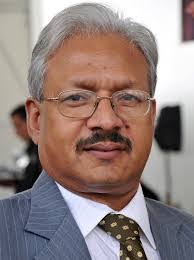 A. J. Philip

.png) Jacob Peenikaparambil
Jacob Peenikaparambil
.jpg)
.png) John Dayal
John Dayal
.jpg)
.jpg)
.png) Joseph Maliakan
Joseph Maliakan
.png)
.png) Robert Clements
Robert Clements
.jpg) Cedric Prakash
Cedric Prakash