


.png) Anju Grover
Anju Grover

A week before the completion of one year of farmers’ protests, Prime Minister Narendra Modi announced that the three farm laws will be repealed. The announcement has taken political parties, farm leaders and people by surprise. Modi said the government would initiate the process to repeal these laws at the end of November during the upcoming Winter Session of Parliament.
Many Opposition parties congratulated the farmers on the Centre's announcement while taking a swipe at the government, saying the "fear of defeat" in the upcoming Assembly elections has forced the BJP to take the decision. Samyukt Kisan Morcha (SKM) has also welcomed the decision of the government. In a statement, the Kisan leaders said they would wait for the announcement to take effect through due parliamentary procedures.
Anju Grover for Indian Currents spoke to farmers’ leader Jagtar Singh Bajwa to know what the decision means for farmers who have been sitting on Delhi’s borders since November 26, 2020. Most leaders were busy in preparations for one year of farmers’ movement when the sudden announcement was made by the Prime Minister on the occasion of Guru Purab. Farm leaders welcomed the announcement but said they would wait for the announcement to take effect.
Bajwa who heads Uttarakhand Bhoomi Bachao Morcha and spokesman of Sanyukta Morcha stressed that the agitation of farmers would not get over with the repeal of the three laws. Farmers will wait for the government to take a decision on the statutory guarantee of remunerative prices for all agricultural produce, besides other issues. He gave credit to the agitating farmers who protested at Delhi’s borders and in their respective areas against the three laws. He also gave credit to 750 farmers who lost their lives during the agitation.
Q: Your views on the decision to repeal the three farm laws?
A: We are thankful to Prime Minister Modi for listening to farmers’ demand and making an announcement. At the same time, we urge him to provide legal guarantee on Minimum Support Price, climate friendly farming and loan waiver for farmers. More than 700 farmers have lost their lives in the agitation and we urged the government to do something for their families.
Q: Are you surprised by the announcement?
A: The decision to axe these laws may have been taken for political reasons as elections in UP and Punjab are due early next year. Even if it is an election majboori, yet we still welcome the announcement.
Q: What was so unique about the farmers’ protest?
A: Farmers have put in their heart and soul in making the protest successful. Despite several challenges, farmers continued protesting throughout the year on the roads. The biggest achievement of farmers’ protest is that political parties have now been forced to think and act for the welfare of farmers and labourers. Earlier, they were doing a lip service only. It is a watershed moment in the Indian democratic set up.
Q: The Prime Minister said that farmers should go back home? Your comments?
A: The Prime Minister did not say anything on MSP which is one of our key demands. What will happen to 50,000 cases filed against farmers? Will the government do anything for the welfare of 750 farmers who have lost their lives during the agitation? The government is yet to prepare a plan to deal with these issues. The farming community has no confidence in the government. We will wait and watch. The agitation will continue till the government prepares a roadmap for protesting farmers. We will decide our strategy as to how we should move ahead now.
.jpg)
.png) Cedric Prakash
Cedric Prakash

.jpg) Elsa Lycias Joel
Elsa Lycias Joel
.jpg)
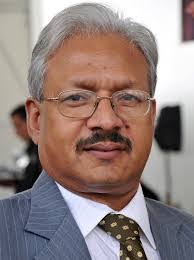 A. J. Philip

.png) Jacob Peenikaparambil
Jacob Peenikaparambil
.jpg)
.png) John Dayal
John Dayal
.jpg)
.jpg)
.png) Joseph Maliakan
Joseph Maliakan
.png)
.png) Robert Clements
Robert Clements
.jpg) Cedric Prakash
Cedric Prakash

 ICPA
ICPA