

.png) Cedric Prakash
Cedric Prakash

Chargesheet against the Government of India for subverting our parliamentary democracy guaranteed by the Constitution of India
Released on February 09, 2024
|
S. No |
Charges |
|
1. |
No Deputy Speaker in Lok Sabha in violation of Article 93 of the Constitution. |
|
2. |
Lowest number of sittings in a full term Lok Sabha, controlling Parliament as per its whims, reducing opportunities for holding government accountability. |
|
3. |
Bringing more and more ordinances bypassing parliamentary scrutiny, re-promulgating ordinances, and committing fraud on the Constitution. |
|
4. |
Introducing bills without following the democratic process and passing bills without discussion, in the absence of opposition MPs in the House, in an undemocratic manner. |
|
5. |
Lack of transparency in the law-making process, not doing proper public consultations, violating Pre-Legislative Consultative Policy and not sending Bills to Standing Committees. |
|
6. |
Passing Budgets without adequate scrutiny, including problematic provisions like the Electoral Bonds in the Finance Bill. |
|
7. |
An unprecedented number of Opposition MPs were suspended in Winter Session 2023, and a virtually Opposition-less Parliament passed controversial Bills. |
|
8. |
The Government is uncomfortable with Questions. Questions asked by Opposition MPs get deleted, and Ministries provide evasive responses to questions. |
DETAILED EVIDENCE
Charge: No Deputy Speaker in Lok Sabha in violation of Article 93 of the Constitution.
Evidence: Since the beginning of the 17th Lok Sabha on June 17, 2019, no Deputy Speaker has been elected in Lok Sabha. This is the first time since independence that the term of a Lok Sabha will complete with the post of Deputy Speaker remaining vacant despite the mandate of Article 93 of the Constitution that stipulates that Lok Sabha 'shall' choose a Speaker and a Deputy Speaker as soon as may be. Since the Speaker is usually a government nominee, the Deputy Speaker has conventionally been the opposition nominee. The nomination is deliberately delayed to establish the supremacy of the ruling party in the Lok Sabha.
Charge: Lowest number of sittings in a full term Lok Sabha, controlling Parliament as per its whims, reducing opportunities for holding government accountability.
Evidence:
• Earlier, the 16th Lok Sabha (2014-19) had the lowest number of sittings during its five-year term – 331 sittings. However, the 17th Lok Sabha will likely have the lowest sittings – approximately 278 (including the scheduled Budget Session 2024). This is markedly lower (approximately 34% fewer sittings) than the NDA's first full term – 423 sittings during the 13th Lok Sabha (1999-2004).
• During 2020, with COVID becoming an excuse, the Indian Parliament was in session for only 33 days. Many other democracies worldwide held virtual Parliament sessions, debates and even remote voting, but the Indian Parliament remained shut for most of the year. In 2020, the Winter Session didn't happen at all. Even Parliament Standing Committees couldn't meet to discuss vitally important issues like the government's response to COVID, the migrant exodus, etc., during the height of the first wave as they were not allowed to meet virtually.
• State Assembly Elections have become an unconstitutional excuse to shorten Parliament sessions. In 2017 and 2022, the Winter Session was delayed and shortened due to assembly elections in some states like Gujarat. In 2018 and 2023, the Winter Session was delayed and shortened due to elections in some states like Rajasthan and Telangana.
• When the government completes its own agenda for the session, it gets it adjourned ahead of schedule. Between 2020 and 2022, seven consecutive sessions ended ahead of schedule. The Special and Winter sessions in 2023 also ended ahead of schedule. When a session ends ahead of schedule, all questions for the remaining day lapse and MPs lose opportunities to raise issues of public importance in the House. Thus, Parliament becomes a platform for pushing only the party's agenda in power, not for debating people's burning issues.
Charge: Bringing more and more ordinances bypassing parliamentary scrutiny, re-promulgating ordinances, and committing fraud on the Constitution.
Evidence:
• Under the UPA II government, 2004-14, 61 Ordinances were promulgated. Between 2014 and 2021, this record had already been broken with 76 Ordinances.
• The Land Acquisition Amendment Ordinance was promulgated thrice (2014-15). The Enemy Property (Amendment and Validation) Ordinance was promulgated 5 times in a single year (2016) – a record of sorts. Repromulgation of ordinances is a fraud on the Constitution, as ordinance-making power is to be used only in exceptional circumstances to make temporary provisions.
• The three farm laws were first brought as an Ordinance as people were busy surviving the first wave of COVID in 2020.
• In 2023, the Government of NCT of Delhi (Amendment) Ordinance was issued to overturn the Supreme Court judgment giving control over 'services' in Delhi to the government of Delhi. This indicates the failure of the present political dispensation to conduct its work more democratically and transparently as per the rule of law.
Charge: Introducing bills without following the democratic process and passing bills without discussion, in the absence of opposition MPs in the House, in an undemocratic manner.
Evidence:
• So far, in the 17th Lok Sabha (as of December 21, 2023), 86 Bills in Lok Sabha and 103 Bills in Rajya Sabha have been passed with a debate time of less than 2 hours.
• In the Winter Session of 2023, after the mass suspension of Opposition MPs from both Houses of Parliament, as many as 14 Bills were cleared by either or both Houses of Parliament within just 3 days in which opposition either did not participate or there was minimal participation.
• During the debate on 3 criminal bills in the Winter Session of 2023, 34 MPs participated in Lok Sabha, of which 25 were from BJP alone. Similarly, of the 40 MPs who spoke on the Bill in Rajya Sabha, 30 were from BJP alone.
• In the Monsoon Session of 2020, as Opposition MPs boycotted proceedings following the Farm Bill fiasco, for 15 of the 27 Bills passed, Opposition MPs were absent in either or both Houses.
• In the Monsoon Session of 2021, as opposition protested because the government stonewalled their demand for debate on the Pegasus snooping scandal and farmers' protest, the Lok Sabha cleared 18 Bills amid protests, spending an average of only 15 minutes on each. Some Bills were cleared within 5-6 minutes.
• In the Monsoon Session of 2023, Lok Sabha passed 7 Bills in just one week, with an average time of only 21 minutes each. The controversial Forest Conservation Amendment Bill was passed in Lok Sabha within 33 minutes, and only 4 MPs spoke. The Digital Personal Data Protection Bill was debated in Lok Sabha for only 40 minutes, and only 8 MPs spoke. In Rajya Sabha, the DPDP Bill was debated for only 50 minutes, during which no Opposition MP participated. The opposition was protesting on the
• Manipur crisis and demanding a debate.
• A new record was set in the Monsoon Session of 2023 when Rajya Sabha passed the Pharmacy (Amendment) Bill within 3 minutes. The next day, Lok Sabha cleared two Bills – Central GST Amendment and Integrated GST Amendment Bill – within 3 minutes!
• Many times, bills are added to the agenda at the last minute.
o In 2017, the Enemy Property (Amendment and Validation) Bill was passed in Rajya Sabha, when most Opposition MPs had left on the assurance that the Bill would not be taken up on that day.
o In 2019, the Jammu and Kashmir Reorganisation Bill was sprung as a complete surprise and pushed through Rajya Sabha without affording Mps any opportunity to read or analyse the Bill.
o In the Monsoon Session of 2021, as many as 11 Supplementary lists were issued, with 9 in Rajya Sabha alone, and 6 of these were to list Bills for either introduction or passing, thus divesting MPs of enough opportunities to study, analyse and debate on the Bills. In fact, on the last day, the Constitution (105th) Amendment Bill and two other bills were added to the Rajya Sabha's agenda through a Supplemental list, allowing MPs only an hour to move amendments.
o In the Winter Session of 2021, the government pushed for passage of the Election Laws Amendment Bill (which provides for Aadhaar – Voter ID linking, among other things) on the same day as its introduction, without providing MPs any time to prepare for debate. It was taken up for debate in Rajya Sabha on the next day itself, with MPs alleging that they were not informed in advance.
o The three criminal Bills were also introduced as a surprise on the last day of the Monsoon Session, 2023.
o In the Winter Session of 2023, the Telecommunications Bill was also introduced by including it in the agenda at the last minute.
o In the last Parliament session of the government before elections, on February 5, 2023, 3 Bills were introduced after including them in the agenda at the last minute.
o In the last Parliament Session, the originally proposed agenda of the government mentioned only 3 Bills, but not only did the government introduce 3 more new Bills not originally included in the agenda, but it pushed at least two more Bills pending from previous sessions, which were also not part of its agenda.
Charge: Lack of transparency in the law-making process, not doing proper public consultations, violating Pre-Legislative Consultative Policy and not sending Bills to Standing Committees.
Evidence:
• From 71% of all bills being referred to Standing Committees between 2009-2014, since 2019, only 16% of bills have been referred to a Standing Committee.
• Only 74 out of 301, i.e. 24.5% of Bills introduced in Parliament, were circulated for consultation between 2014 and 2021. Of these 74 Bills, at least 40 were not circulated for 30 days, as specified in the Pre-Legislative Consultative Policy.
• More controversial Bills are sent to Joint Parliament Committees (as the government decides who gets to be on a JPC). Since 2014, the following Bills were sent to JPC, chaired by BJP MPs, instead of the relevant Standing Committees, chaired by Opposition MPs:
o Land Acquisition Amendment Bill
o Citizenship Amendment Bill
o Personal Data Protection Bill
o Forest Conservation (Amendment) Bill
o Biological Diversity (Amendment) Bill
• Increasingly, committees are also not inviting comments from the public and are not undertaking consultation properly before submitting their reports. The JPC on the Jan Vishwas Bill did not invite comments from the public. The Standing Committee on Home Affairs, chaired by a BJP MP, which was studying the three criminal Bills, did not invite comments from the public. Several Opposition MPs submitted dissent notes alleging that the Committee rushed with the process and only invited selected people to depose before the Committee.
• As per the petition filed in the Supreme Court challenging the Forest Conservation Amendment Act, 2023, the JPC on the FCA Bill received 1309 memoranda from the public, which were critical of the Bill, but the JPC ignored most of these and failed to make recommendations to improve the Bill.
Charge: Passing Budgets without adequate scrutiny, including problematic provisions like the Electoral Bonds in the Finance Bill.
Evidence:
• Between 2016 and 2023, on average, 79% of the budget has been passed without discussion. As per the conventional process, the Lok Sabha discusses the budgets of some Ministries in detail and votes on them separately. After the days allocated for budget discussion are over, the budgets of remaining Ministries are voted upon together without discussion, a process termed 'guillotine'. Fewer sittings, short budget sessions, and poorly planned agendas of a government not interested in transparent accountability and debate lead to less and less proportion of the budget being discussed in detail and more and more of it being passed without discussion.
• The Budget Session of 2018 saw the entire government budget passed within an hour and amidst chaos, without any discussion, i.e., 100% guillotine. This happened as the days allotted for discussion and voting on the budget saw protests as the Speaker was not accepting the opposition's demand for a no-confidence motion.
• In 2018, the Finance Bill was passed within eighteen minutes without discussion.
• In 2020, the Finance Bill was passed within an hour without any discussion, as the government curtailed the Budget Session ahead of schedule a few days before imposing a nationwide lockdown.
• In 2017, the Finance Bill contained controversial non-financial provisions for restructuring tribunals, allowing anonymous political donations through electoral bonds, making Aadhaar mandatory for applying for a Permanent Account Number, etc.
• In 2023-24 also, the entire budget was passed without any debate within just 8 minutes amid protests and disruptions in the House. The opposition was demanding a JPC on the Adani scam. The Finance Bill was also passed without any debate within just 35 minutes.
• The Budget Session has a recess in between to enable Standing Committees to scrutinise the Budget of each Ministry in detail. But, the government is giving less and less time to Standing Committees to study Budgets. From a 40-day recess in 2016, the recess came down to only 20 days in 2021.
Charge: An unprecedented number of Opposition MPs were suspended in Winter Session 2023, and a virtually Opposition-less Parliament passed controversial Bills.
Evidence:
• It has become a routine practice now – Opposition demands debate and discussion on an issue, the government keeps stonewalling and denying debate, opposition protests and disrupts, and the government uses that as an excuse to push Bills through without debate amid protests. This time, the opposition's protest demanding a debate on the Parliament security breach led to an unprecedented 146 MPs from Parliament being suspended. This is the highest number of MPs to have been suspended ever. This amounted to almost 20% of the strength of both Houses and virtually the entire opposition.
• While most MPs were suspended until the end of the Winter Session, several were suspended indefinitely pending an inquiry by the Committee of Privileges against them. Such indefinite suspension is illegal as rules do not empower either the Speaker or the House to suspend MPs beyond the session in which they are suspended.
• After the suspension of MPs, several crucial Bills were pushed through both Houses, including the three criminal Bills, the Telecommunication Bill, the Bill for the appointment of Chief Election Commissioner and other Election Commissioners, etc.
Charge: The Government is uncomfortable with Questions. Questions asked by Opposition MPs get deleted, and Ministries provide evasive responses to questions.
Evidence:
• Close to 290 Questions asked by Opposition MPs were deleted after they were suspended from the House during the Winter Session of 2023. No rules provide for questions of suspended MPs to be deleted.
• This was not the first time this has been done. There are media reports of this happening in 2015, and since then, there have been records of this happening in 2020, 2021, and again in 2023.
• In 2020, the government also cited COVID as an excuse to do away with Question Hour during the Monsoon Session 2020. Though under pressure from opposition parties, it agreed to answer questions only in writing. No Question Hour was conducted during the Special Session of 2023, and no questions were answered.
• Ministries also evade questions, ignore controversial sub-parts of questions, give misleading or incomplete responses or simply say – data is unavailable. While earlier governments have also tried to evade questions, as no government will be comfortable in answering questions, the current dispensation has demonstrated a particular contempt for people's accountability.
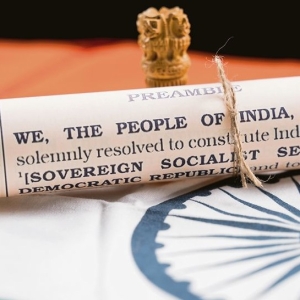
Thus, We, the People of India, charge the Government of India for violating the ideals of democracy, justice, rule of law and accountability enshrined in the Constitution.
.jpg) Cedric Prakash
Cedric Prakash

.jpg) Elsa Lycias Joel
Elsa Lycias Joel
.jpg)
 A. J. Philip

.png) Jacob Peenikaparambil
Jacob Peenikaparambil
.jpg)
.png) John Dayal
John Dayal
.jpg)
.jpg)
.png) Joseph Maliakan
Joseph Maliakan
.png)
.png) Robert Clements
Robert Clements
.jpg) Cedric Prakash
Cedric Prakash

 ICPA
ICPA