
.jpg) IC Correspondent
IC Correspondent

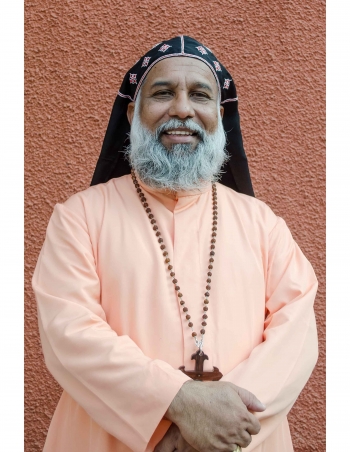
(Following is the text of the interview Cardinal Baselios Cleemis, Major Archbishop of the Syro-Malankara Catholic Church, gave to Indian Currents in the wake of the Synod which was inaugurated by Pope Francis on October 10)
Indian Currents: The Synod on ‘Synodality’ is expected to make the Church a more listening and participative one. Do you think this will become a reality for the Church in India ?
Cardinal Baselios Cleemis: The Catholic Church is preparing to have another synod. This year the theme of the synod is Synodality. It is a significant theme which will be discussed from the international perspective to be followed in the church.
The theme Synodality has its basic inspiration from the book of the Acts of the Apostles. Chapter 15 of the Acts describes the Council of Jerusalem. The discussion in the Council of Jerusalem was conducted in a ‘synodal’ way. Both Saints Peter and Paul followed the principle of consultation and participation of all in the decision-making process.
The same Chapter tells us how the early church moved ahead. We find two different groups there: The church of Jewish tradition and the newly received Christians from a different context whom they identified as gentiles. The issues plaguing the church were resolved in the Council of Jerusalem. It gives us the way to move on in a ‘synodal’ way in our modern context.
The theme Synodality is relevant today. We need a church in counsel, praying together, a church listening to voice of the Holy Spirit and a church obeying the will of God.
Church is not a monolithic or democratic society, but it has the values of systems within the church. The church respects the voice of the people, Vox populi, vox dei. The voice of the people is the voice of God. But the vox populi must listen to the promptings of the Holy Spirit. We must decide on issues according to what the Spirit tells us to do. I think this is the essence of synodal thinking and the way forward for the Church.
For Pope Francis, Synodality is a way forward for the Church. The Holy Father is trying to bring the Church closer to the Gospel and to the image of the kingdom of God as described in the Gospels. He has publically said, “Love and Mercy matter a lot”. Pope Francis calls the earth, “the Mother Earth”, addresses everyone “Fratelli Tutti” that is ‘all are brothers and sisters’ irrespective of caste, colour and creed.
Now Pope Francis tells the whole Church that we need a guiding principle for our reflections and decisions in the Catholic Church. He presents Synodality as the ideal way. He wants us to have a synodal church, synodal way of thinking, acting and deciding.
How will Synodality become a reality in India?
As I see it, Pope Francis wants the church to listen to the voice of the people, the faithful, and we pray together and reflect on that theme and listen to promptings of the Holy Spirit and see what is good for the church to follow. This will be different in the context, as there will be diverse solutions depending on the context and different measures to find the right way.
I think for the church in India, the common mandatory principle should be to listen to the voice of the faithful carefully, listen to the voice of God carefully, thereby getting attuned to the promptings of the spirit. Together we shall see what is best for us. The Gospels and the Holy Spirit must guide us in our deliberations.
Coming to a particular context, if there is an issue, how shall we resolve? Should we deal (with it) like an administrator of a corporate system or as the apostles Peter and Paul did, receiving inspiration from the Word of God and the Holy Spirit, deliberate with the people concerned? I think the answer is an evangelical methodology.
Is this answer a happy one for all? Need not be. But does it make the Lord happy? Yes. Our procedures and decisions must be in conformity with the Gospels.
In modern times the democratic principles are interpreted as theoretical value system, but in practice, most of the time, it is the voice of the strongest. Need not be the real vox populi. Those who have power, their voice is heard. Let us remember, there are weaker sections. Their voices are unheard. Democracy need not be successful in all cases because of the majority. It is imperative to give opportunities for all to speak, listen to all and give importance to all. Majority is not the deciding factor, but conformity with the Gospels and the role of the Holy Spirit are (deciding factors).
We have three Rites in India and the presence of the three individual Rites are very powerful in Kerala. How do you envisage collaboration among the three Rites in the context of the Synod on Synodality?
The basic nature of the Church is synodal. The Catholic Church itself is a communion of individual churches. In India we have three Rites. Each Rite has its own patrimony. Each church should maintain its own synodal way of thinking within its own context. When it comes to the common witnessing, especially in Kerala, where the three individual Rites have visible presence, the KCBC must function on a synodal manner, listening to one another, respecting one another, caring for each other and witnessing the mother church in a deeper sense of communion. Only a synodal church can witness communion in a serious manner in the given contexts.
Parish is at the bottom of the Church hierarchy. How will the voice of the parishioners get reflected in the forthcoming synod?
The universal Synod is convoked in a representative manner. I must say, we have parishes, in the parish itself there are families. Family should be heard in the synod, in the reflections and deliberations. Family is the domestic church.
How does a domestic church witness the Christian life, what is the methodology of witnessing the Gospel by a family? What is being practiced in the family is vividly expressed in the universal church in different context and in different situations in different continents. That is the replica of the church universal. This should be highlighted in the parishes, dioceses and in the church sui iuris, nationally and universally.
What are some of the key issues which the Church in India needs to address in this Synodal process?
Why did the Holy Father choose synodality as a theme for the synod? Because the Holy Father considers synodality as the guiding principle. Pope Francis prayed over and decided the theme.
He wants that the voice from the ground should echo in the synod. It is two-way communication. The Holy Father wants to listen to all. It includes Indians. Our voice will be heard. We will communicate to the Holy Father and to the Church.
Similarly, we will listen to the Holy Father and voices from other nations and continents. It is listening and sharing from top to bottom and bottom to top. It is participatory in nature. Here I would like to make an emphasis on decisions. It is not an adjustment of coming to a conclusion or an agreement psychologically made. But it is an understanding of the Gospels or the evangelical values in the church. It will be the guiding force in the decision-making process of the church. This includes everything and everyone.
Have the preparations begun in the Syro-Malankara Church?
The Syro-Malankara Church has a synodal system of administration. The bishops are not merely representatives of particular dioceses. They are the shepherds of the church, called to focus on the concerns and issues of the church. They are called to be shepherds with the smell of the sheep. Their hearts must be after God’s own heart. They also represent the particular portion of the church entrusted to their care. They represent the church to that diocese and from that diocese to the church universal.
The church constituted dioceses and not the other way. So the people of God are a constituent part of the ecclesial reality. The imperative value is very significant. Hence listen to them, consider them, and care for them.
The synodal structure of the eastern churches is different from the western system. In all the fora of the church, there is a representative character. And I must say, it is a clear reflection of synodality. The active role of the laity within the church is also a reflection of the theme synodality put in practice.
Sometimes within the church there is a misunderstanding, that if the authority of the clergy is transferred to laity, that is democracy. But what we should understand is, the church has entrusted certain mission to certain people. Don’t assume unnecessary concept of power to the office of clergy. Pastoral ministry is not to be understood as a power ministry.
Laity’s participation in the church is not to be underestimated as passive participants’ role. Each ministry has its own values if we take the synodal structure as the valid methodology meant for all. And the principle of subsidiarity also is significant in the synodal structure. There should be a beautiful blend of mutual respect and care.
How do you plan to go ahead with the synod process in the Malankara Church?
We have our Synod in the Syro-Malankara Church in December, to think and plan out, for our general review, for proposing our views to be submitted to the Holy See.
We would like to highlight the eastern perspective of synodality in the universal church in its reflection and practice. Synodality is not an adjustment of system, it is a spiritual act of reflection and action based on the Gospel.
When we have the synod, we will be able to prioritize the aspects of synodality and we will submit it to the Holy See. The Malankara Church is happy that the Church has taken the theme synodality in a serious manner for a life of witnessing. Synodality brings introspection, communion with the whole Church and commitment to the Gospel.
The gathering of the faithful is significantly different from the assembly of the crowd. The fellowship of God’s children in the Eucharistic celebration or prayer sessions/sacramental celebrations is different from those thousands of people gathered at a spiritual event without a living proclamation of ‘Amen’ from within.
If you don’t respect the voice of the weak and those who are at the periphery of life, yours is not the vox populi even when you have a brutal majority of votes in a session. The crowd’s voice need not be the voice of the majority. As we march forward in the Church with the Gospel theme, Synodality, the voice of the people, should be distinctly discerned and be heard. May the Holy Spirit strengthen us all in that discernment.
.jpg)
.png) Cedric Prakash
Cedric Prakash

.jpg) Elsa Lycias Joel
Elsa Lycias Joel
.jpg)
 A. J. Philip

.png) Jacob Peenikaparambil
Jacob Peenikaparambil
.jpg)
.png) John Dayal
John Dayal
.jpg)
.jpg)
.png) Joseph Maliakan
Joseph Maliakan
.png)
.png) Robert Clements
Robert Clements
.jpg) Cedric Prakash
Cedric Prakash

 ICPA
ICPA