

.png) Joseph Maliakan
Joseph Maliakan
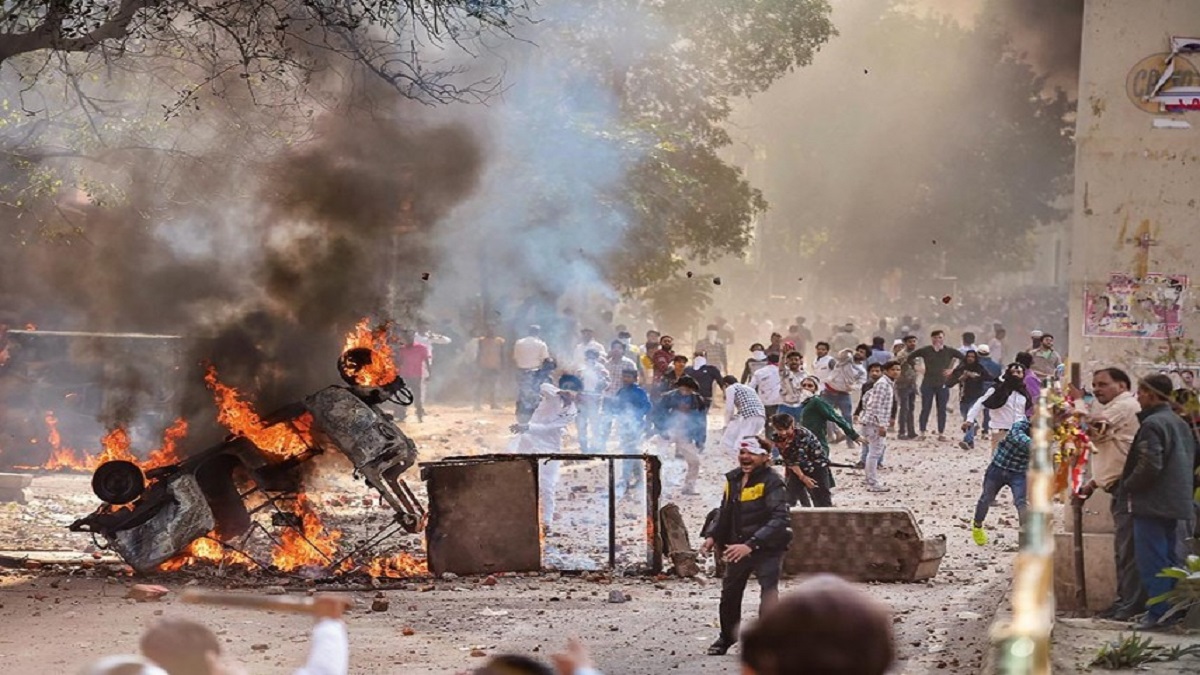
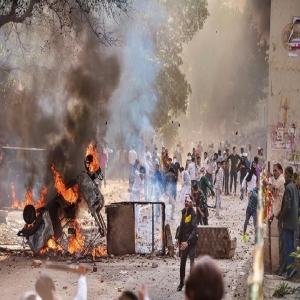
Never before in independent India's history have the victims of a riot been neglected and persecuted as the victims of the 2020 North East Delhi anti-Muslim pogrom. Five years after the riots, both the Union government and the State government have failed in the matter of reparation, during and after the 2020 communal riots - of rescue, relief, rehabilitation, compensation and bridging the social divide.
A detailed report prepared by Karwan-e-Mohabhat and released on the fifth anniversary of the riots has revealed that the police did not undertake even the most elementary task of rescue. Thousands of calls from the victims to the police were not answered, and it took the midnight intervention of the Delhi High Court to start rescue operations.
The State government initially did not set up relief camps and only subsequently designated nine shelters for the homeless as relief camps. The shelters, already overflowing with homeless, gave no relief to the riot victims. The injured victims taken to various public health facilities hardly received adequate, timely help. The rioters even stopped ambulances carrying injured victims to hospitals while the police simply stood and watched.
The Union government did not offer any compensation to the riot victims. During the first few months after the violence, the Government of the National Capital Territory of Delhi distributed death compensation and exgratia payments to some injured. It also distributed small amounts of compensation to those whose properties were destroyed, but it was meagre.
Within weeks of the 2020 Delhi riots, the Delhi government led by Arvind Kejriwal of the Arm Admi Party abdicated its responsibility to evaluate the damage caused by the communal violence and disburse adequate compensation to the victims to rehabilitate themselves. The Delhi government approached the Delhi High Court requesting it to hand over the task of evaluating the damage to a North East Delhi Riots Compensation Commission (NEDRCC). Even though the Commission has assessed the losses and the High Court has approved compensation for the victims, no compensation has been paid to any victims.
Except for a few months after the violence, the Delhi government did very little to provide relief or rehabilitate the riot victims, reflecting a deliberate reluctance to provide adequate relief and compensation to the victims.
The Delhi government's annual budget is over 75,000 crores, but only 153 crores were requested for compensation for the 2020 riot victims. For some strange reasons, the Delhi Government allocated a mere 21 crores for compensation. In this amount, the Delhi government also included expenses for repairing government property damaged during the violence, like transformers, electric poles, and other infrastructure.
Strangely, the survivors of the violence were not informed about the Commission's establishment. No procedure for evaluating losses and for appealing to the Commission was notified. The Commission depended on private evaluators for loss assessment, and they adopted their own standards and procedures. In most cases, evaluators or the Commission did not hear the victims.
Even after the Commission unilaterally evaluated losses, the State has not budgeted for compensation, and the victims cannot hope for compensation in the foreseeable future.
The February 2020 communal violence in North East Delhi left 53 people dead and hundreds injured. A large number of working-class people suffered tremendous losses; their houses and business establishments were looted and then set on fire. Initially, the Delhi police arrested 1,330 people who had been accused of 751 criminal cases. Of the arrested, 700 were Muslims and 630 Hindus. By mid-July, the Delhi police arrested another 100 people, making the total arrested 1,430.
Now, what is very alarming is that the report has revealed that the people affected by the 2020 violence are still reeling from psychological, physical and mental trauma and financial losses that completely destroyed their lives overnight. The report concludes that the Union and State Government's relief, rehabilitation, and compensation efforts failed on many counts. It also reveals how profoundly the State has failed to do its duty towards the victims of such a terrible tragedy.
The Karwan team extended social and legal support to victims in the aftermath of the violence. In the dataset of 146 cases mentioned in the report, a predominant 81 per cent pertains to matters concerning property damage, loss for residential units, commercial units or both. The cases associated with physical injury constitute 18 per cent. These 146 cases were initially pursued for compensation at the SDM office before NEDRCC was established. Only 117 cases reapplied to the Commission for compensation. Unfortunately, even five years after the pogrom, not a single dime has been disbursed to the victims as compensation!
.jpg)
.png) Cedric Prakash
Cedric Prakash

.jpg) Elsa Lycias Joel
Elsa Lycias Joel
.jpg)
 A. J. Philip

.png) Jacob Peenikaparambil
Jacob Peenikaparambil
.jpg)
.png) John Dayal
John Dayal
.jpg)
.jpg) Joseph Maliakan
Joseph Maliakan
.png)
.png) Robert Clements
Robert Clements
.jpg) Cedric Prakash
Cedric Prakash

 ICPA
ICPA