


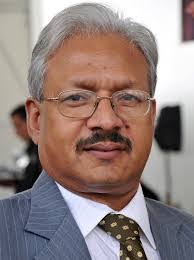
.jpg) Dr. Paul Pudussery
Dr. Paul Pudussery

Catholic schools endeavour to provide excellent education for the future of their students and the society. Their educational mission is closely linked to the mission of the Church which is rooted in the values of the Gospel and grounded on the concept of love, forgiveness and justice.
In Catholic schools, therefore, good education goes beyond a simple list of societal assignments such as acquiring literacy and mathematics skills, and internalising social and democratic behaviour. It intends to contribute to the greater good of humanization.
The students in the Catholic schools are encouraged to participate in nation-building and to actively engage in the family and the society. Their distinctive articulation and interpretation are based on and motivated by a religion having its origin in the person of Christ, and its roots in the teachings of the Gospel.
Catholic school leaders are challenged to maintain "mission integrity", and to remain faithful to the principles of Catholic education in the era of post-truth. While their daily praxis is characterised by multiple interruptions, even school leaders with profound theoretical knowledge and extensive experience do not automatically know how to deal with them in a way that aligns with the distinctive and authentic principles of Catholic education. There is a fear created both internally and externally by the happenings reported or not reported in the main line media yet easily circulated in social media.
A Catholic educational leader has to acquire the capacity to absorb uncertainty, welcome dialogical conflict, encourage critical self and institutional reflection, with its propensity to action, with its commitment to the development of virtue incrementally over time.
Education systems are embedded in the social, economic, and political contexts that affect their purpose and functionality. Among the issues at play in developing and maintaining education systems have been shifts in the role of the state and non-state actors with the introduction of multiple laws and regulations that govern the school administration.
It is in this context “A paradigm shift” is needed in Catholic education for the 21st century. The new paradigm needs to communicate that the purpose of Catholic education is not to transfer knowledge but to create environments and experiences that bring students to discover for themselves, to make students members of communities of learners that make discoveries and solve problems. The New Frontiers for Catholic Schools, the harnessing the power of technology, especially the artificial intelligence, virtual reality and augmented reality-based applications infused in pedagogy is a vital part of the future of Catholic education.
The treatment of workers is an ongoing social issue. No organization is immune to questionable employee practices, including Catholic educational institution. Educational leaders are called to make decisions centred on love and reality, that actively pursue their employees' best interests without irreversibly depleting the institutional resources needed for overall survival. The associates in education need to be taken into confidence. There has to be transparency in decision making. The frequent and often unjust transfers of religious serving at the school hinder continuity and displays a lack of authenticity within the organization. The institution has to ensure promulgation of proper rules, regulation and guidelines. These need to be implemented without favour and ensure a fair treatment of all associates while selecting to ensure qualification, character, skills and competency. Have all the documents signed and appointment issued by the competent authority, learn and constantly incorporate the provisions of the law that is applicable to the institution.
Documents and documentations becomes essential in the educational institution. The affiliated boards have laid down the stipulated essential and required documents. The leadership has to ensure a periodic check and updating of these documents. A standard operating principles (SOP) has to be in place to handle unexpected eventualities and a periodic drill of the same is very crucial in administration of the institution. At leadership change over, ensure these documents are presented and verified by a competent authority within or from outside with required expertise in the field. The essential data and details of the contact persons in case of emergency be easily accessible.
A continuous professional development (CPD) has to become a norm. It has to be offered by people who have expertise in the field, not because they wear a cassock or a habit, or because they were in leadership position in the sponsoring organization. Maintain a record of the same and introduce the three-sixty (360) evaluation of all engaged in the process of teaching and administration with a clear laid out rubrics. Such supervision will ensure innovation, imagination and creativity.
Have a theme for the year based on one or two core values of the sponsoring organisation and entire curriculum and all other activity should be centred around that value. A value that can be inculcated and nurtured all along the student life at school and lived throughout their lives.
Social media and social network define the narrative of the school. The leadership has to encourage social media engagement with certain guidelines that ensure the privacy and safety of every stakeholder. Ensure that you are in touch with local police station and other governmental agencies. At the time of admission due and respectful consideration should be available to these individuals and institutions that support the cause of education.
Communication is a skill and an art. A quality communication is essential for the smooth functioning of the institution. Mobile calls, emails or any other form of communication need to be attended to, in a timely manner. The school website should have all the necessary information pertaining to the functioning of the institution. The theory of “Nokia effect” is becoming a reality for the Catholic institutions. Possibly, Nokia did not do anything wrong, but others did better.
In this context a Catholic Education Institution needs to look outwards. Discernment starts with seeing differences, which involves attentive receptivity, openness for what emerges, allowing it to draw one's attention, and wondering about it. To look outwards aims not only at seeing different positions or perspectives, but also at sensing the good that emerges in what others bring in or in what happens next.
Catholic institutions need to look inwards. Discernment proceeds with reflection and self-examination. Reflection aims to interpret an incident to discover which values and ethical commitments are at stake or about to emerge. Self-examination aims to investigate how we are involved with these values and commitment to what happens, what we find desirable and what our motives are. Being attentive to emerging deep feelings is very important for reflection and self-examination.
Catholic Educational Institutions need to engage in deliberating with others. Discernment is not conceivable without critical deliberation. To discover possibilities to strive for desirable values and ethical commitments, discernment must involve genuine deliberation with others. Insights and arguments should be placed in the "critical middle" in order to come to a new, unexpected and shared understanding.
Catholic Educational institutions need to decide what to do. Possibilities should be judged carefully, and in two ways. Discernment involves a principled judgment -- not so much with a view to "solving the problem" of an incident, but in order to act in a contemplative way; that is, with a view to the ultimate good -- and a pragmatic judgement, in order to choose the most desirable option in this particular situation. The desirable option should then pass the test of justice and fairness.
Any Civilization is both culmination and acculturation of work required to survive in the world. The Truth is always naked. Any attempt to cover it, is a lie. We live in a post-truth era where contradictions define identity. The ambiguity of real and unreal is an absurd phenomenon, which we are dealing with. In the post-globalized world, however, the ‘tipping point’ logic perversely follows the same principle. Learning in the age of robotics is a monumental event in the unfolding drama of human evolution. Therefore, we must make ourselves historical against a mystifying history, that is, historialize ourselves against historicity.
(The writer is a Social Science Researcher and can be reached at 9402168195 or pudusseryp@gmail.com)

.jpg) Stanislaus Alla
Stanislaus Alla
.jpg) Stanislaus Alla
Stanislaus Alla

 Adv. Rev. Dr George Thekkekara
.jpg)
 A. J. Philip

.jpg)
.png) John Dayal
John Dayal
.jpg)
.png) Jacob Peenikaparambil
Jacob Peenikaparambil

.jpg)
 P. A. Chacko
.png)
.png) Robert Clements
Robert Clements