
.jpg) Mathew John
Mathew John

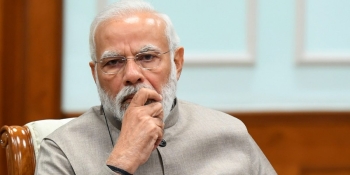
This brooding meditation is about civility and values. And the loss of decency in our society, instigated by that roguish mischief-maker viz. politics. Never has boorish behaviour in the public arena been so widespread and so normalized as today. There is no longer debate and dialogue but an attritional war of vituperative slander, falsification and insults, with guns and violence close at hand. What has triggered this vicious brand of politics will be investigated by sociologists, but it is not hard to tell that leaders with a cult following like Trump and Modi have been instrumental in fomenting this ugly new genre of attack politics. In a crass world inured to outrage and at ease with celebrity delinquency, these leaders are adored for their disrespectful, insulting conduct when dealing with political opponents.
Hitherto, through our history as an independent nation, from Nehru to Vajpayee and Manmohan Singh, our leaders maintained the highest standards of political decorum which entailed giving one’s opponents the respect and dignity that every human being deserves. That world of civility is gone! Modi has changed the rules of political engagement even as he subverts the institutions and traditions of a democratic society. There is no longer any civilized debate, only high-octane condemnation and abuse of the other side.
A past master at insulting political opponents, he has upended every precept of chivalry and decency with his rhetoric in his “Didi-o-Didi” catcalling at Mamta Bannerji, his infamous putdown of Shashi Tharoor’s wife with the cheap “50 crore girlfriend” jibe, and his loaded barb calling Sonia Gandhi the “Congress widow”. What’s dismaying is that instead of moral revulsion, the PM is widely applauded. In the toxic political environment created by Modi and his followers, kindliness and decency are viewed as weakness.
Modi’s disparaging attitude toward his opponents has rubbed off on his followers who believe that the louder, more toxic and abusive they are, the more convincing their argument. The other day, the BJP’s IT head proved on national TV that there is no limit to arrogant, rude behaviour among the ruling party’s spokespersons. Unable to digest the recent Karnataka Assembly election thrashing, he yelled at the best-known India Today anchor, making derogatory personal comments, accusing him of being a propagandist and stooge of the Congress. To the TV anchor’s credit, he handled the bully admirably by embracing Michelle Obama’s adage: “When they go low, we go high!”
The nature of the politics in our land today has not only engendered an implacable hostility between political combatants but has also infected the rest of us. In our dystopian world, judgments of people are coloured by which side of the divide they stand; a person is acceptable or anathema depending on his politics. The stark ideological choice presented to the ordinary citizen today is between two irreconcilable viewpoints -- the far-right, exclusionary Hindutva way vis-à-vis the secular spirit proclaimed in the Preamble to our Constitution. How on earth can the twain meet?
The overwrought, crazed political environment of the day has ruptured relations within families and between friends. We were a close-knit group of eight friends who met once every week for many years, sharing our joys and our sorrows. But now we are whittled down to four because of irreconcilable political differences. Two friends, septuagenarians like me, have sorrowfully acknowledged that political disputations between family members have become so sharp that coherent discussions are no longer possible. I know of WhatsApp groups where the few plucky dissenters have been bawled out of these cyber chat clubs by the sheer intimidatory force of the Bhakt trolls, who hunt in packs, using their overwhelming numbers to attack their targets with character assassination, profanity and plain bullying.
Every issue is painted as black or white, without any in-between or nuance. And loyalty to the cause is the supreme virtue, more important than the truth. Allow me to flesh this out with a personal example. As an indebted and proud former railway man, I wrote an essay pushing back against this regime’s imprudent systems revamp of the Indian Railways (IR), the lopsided emphasis on image-building and the glamorous rather than on substantive matters and the absurd claim that the IR was moribund until unshackled by the sheer revolutionary thinking of this regime. As expected, I copped a torrent of abuse that ranged from calling me an anti-national, a hatemonger, a stooge of the opposition, branding me a disgrace to the organization and a lot worse. Significantly, of the numerous trolls, not one of them took me up on the issues I had raised regarding the willful degradation of the organization. They have clearly bartered away loyalty to the organization that provided them with their livelihood for allegiance to their Teflon god.
Speaking in 2020, amid the hollowing out of decency and social graces in a polarized, Trumpian America, Barack Obama alluded to an “epistemological crisis” that has led to Americans failing to distinguish between justified belief and prejudice, between truth and falsehoods. Under Modi, India is in a far more difficult place. Unencumbered by moral or ethical considerations, there is no respect for the truth nor is there even the pretence that truth and decency are essential values.
The volatile political environment has had malign repercussions beyond personal estrangements. Like never before, every one of us has been made acutely conscious of belonging to one religious denomination or another. Sadly, the religiosity invoked is not of values but of our basest instincts, the kind that provoked Jonathan Swift to observe that we “have enough religion to make us hate, but not enough to make us love one another.” Where polarization is barely disguised State policy, the malign doctrinal battle lines are drawn between the burgeoning number of “majoritarians” on the one side and the minorities, mainly Muslims and Christians (shamefully equivocal in Kerala) on the other, shored up by the intrepid tukde-tukde gang. We are a broken society!
The UN Sustainable Development Solutions Network which annually ranks countries on their happiness quotient, has seen India’s position slip from 111th in 2013 to 126th out of 136 countries in 2023 based on key happiness indicators such as freedom, generosity, social support, income, health and absence of corruption. That we rank lower than Bangladesh, Sri Lanka and Nepal clearly show that much more than bland economic factors make for happiness. Let’s face the bitter truth: it is impossible for a deeply divided and conflicted society that has lost the capacity of empathy and civility to be happy or at peace.
Will civility ever return to our public discourse? Where conversation has broken down, will old ties of kinship and friendship ever be restored? Will we listen and talk to each other again like of old? Sadly, even if this authoritarian nightmare recedes, its damage to our psyches will not heal so easily. I am acutely aware that I was a calmer, more balanced and altogether nicer person in 2014 than I am today, and I suspect, so were we all. Today, ours is a joyless, unjust society full of anger and hate.
A few days ago, I shared with my poet-friend a Congress-inspired social media video clip which has Rahul Gandhi expounding on the difference between Hinduism and Hindutva, between a Hindu and a Hindutvadi, between Gandhiji and Godse. I got the hang of the message but the poet, ever alive to the finer nuances of language, straight away identified Rahul’s uncharacteristically strident and hectoring tone as a mirror replication of the infamous Arnab Goswami ranting bluster. She sombrely noted that to be heard in our crass, screeching society which is deaf to “the dulcet tones of reason, understanding and culture”, such an ugly exposition of views is de rigueur.
Folks, this is the India of today, not the nice place it once was!
(The article first appeared in The Wire; The writer is a former civil servant. The views are personal)
.jpg)
.png) Cedric Prakash
Cedric Prakash

.jpg) Elsa Lycias Joel
Elsa Lycias Joel
.jpg)
 A. J. Philip

.png) Jacob Peenikaparambil
Jacob Peenikaparambil
.jpg)
.png) John Dayal
John Dayal
.jpg)
.jpg)
.png) Joseph Maliakan
Joseph Maliakan
.png)
.png) Robert Clements
Robert Clements
.jpg) Cedric Prakash
Cedric Prakash

 ICPA
ICPA