

.png) Jacob Peenikaparambil
Jacob Peenikaparambil
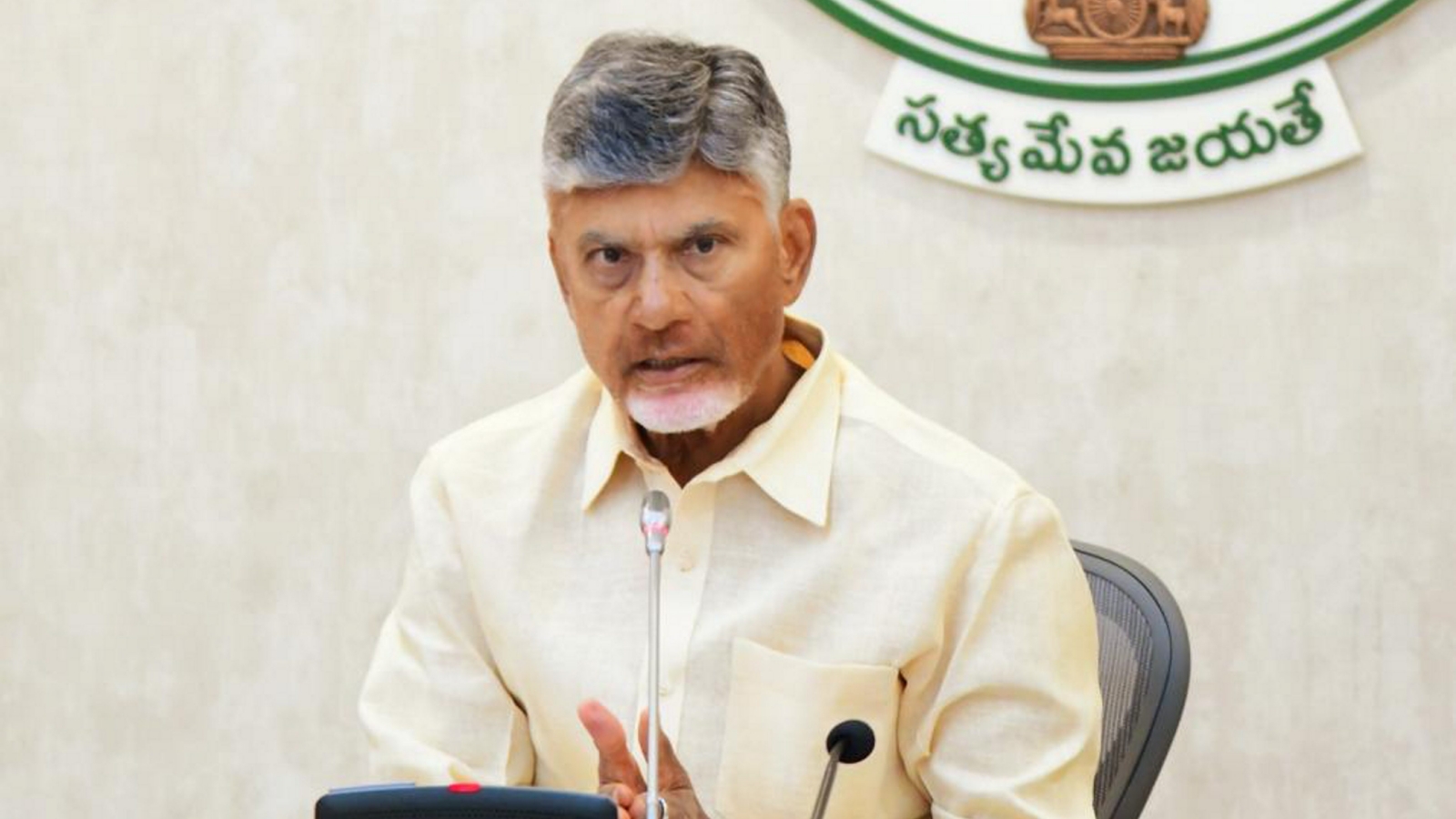
The Supreme Court's rap to Andhra Pradesh Chief Minister Chandrababu Naidu to keep gods out of politics should have come years ago when the BJP brought religion into the centre stage of politics. However, better late than never. The message from the Supreme Court should go beyond Andhra Pradesh; it is directed at all those who blatantly use religion for political purposes.
Allegations of adulteration of ghee used to make laddoos, or devotional offerings (prasadam) at Andhra Pradesh's Tirupati temple, have become a political controversy and a sensational religious issue ever since the AP Chief Minister accused that animal fat was found in the ghee used for making laddoos during the rule of former Chief Minister Jagan Mohan Reddy.
Hindutva supporters, without verifying the veracity of the allegation, began making provocative statements to polarise Hindus on a highly sensitive issue. As Jagan Mohan Reddy is a Christian, Hindutva elements tried to communalise the issue. The controversy was taken to the Supreme Court after petitions were filed by BJP leader Subramanian Swamy and YSRCP Rajya Sabha MP YV Subba Reddy. Mr Subba Reddy had served as Chairperson of the Tirumala Tirupati Devasthanams, the state-run trust that manages the Tirupati temple.
During the hearing on Monday, September 30, the Supreme Court asserted that politics and religion should not be mixed and posed several serious questions to the state government. The Court emphasised the lack of definitive proof of ghee contamination or, if contaminated, whether the affected ghee was actually used to make the laddoos.
A bench comprising Justice BR Gavai and Justice KV Viswanathan of the Supreme Court expressed disapproval of Chief Minister Chandrababu Naidu's public statements on the matter, especially when his administration had already ordered an inquiry into the findings of a Gujarat lab report in July, which claimed fish oil, beef tallow, and lard were found in the ghee. The Court asked, "When you hold a Constitutional post, we expect gods to be kept away from politics. If you had already ordered an investigation, what was the need to go to the press? The lab report came in July, and your statement came in September. The report is not at all clear." The Court also questioned why the state government did not seek a second opinion before making a public statement.
Chandrababu Naidu, who is not generally perceived as a Hindutva supporter, might have taken a shortcut to outmanoeuvre his political opponent, Jagan Mohan Reddy, using the Hindutva card. However, he appears to be on a weak footing. First, there is no conclusive proof that contaminated ghee was used to make laddoos. According to the test conducted by the Centre for Analysis and Learning in Livestock and Food (CALF) in Anand, Gujarat, the analysis mentions a range of "foreign fats"—from soybean, olive, sunflower, rapeseed, and cottonseed to fish oil, palm oil, beef tallow, and lard. Second, it is unclear how much of these fats were present in the ghee supplied by the Tamil Nadu-based supplier AR Dairy in Dindigul. Third, the CALF report includes various caveats. Fourth, the Ghaziabad-based National Food Laboratory (NFL) is the apex food quality body. Why did the state government not send the samples to the NFL for final verification?
The BJP and its allied organisations are trying their best to communalise the laddoo issue, hoping to capitalise on it to win Hindu votes in the upcoming Haryana, Jharkhand, and Maharashtra elections. The Judiciary has been sending mixed signals regarding the politicisation of religion. The Supreme Court's Ayodhya verdict itself is confusing. While the judgment stated that the demolition of Babri Masjid was a "calculated act" and an "egregious violation of the rule of law," the disputed land was still handed over to Hindus for temple construction.
The BJP, which had only two seats in the Lok Sabha in 1984, won 303 seats in 2019, largely by resorting to majoritarian politics and mixing religion with politics. The Ayodhya issue played a crucial role in its rise. LK Advani's 1990 rath yatra from Somnath to Ayodhya, which caused communal riots in many places, was an overt example of this tactic. According to KM Panikkar, 116 communal riots occurred between September 1 and November 20, 1990, resulting in 564 deaths. Many of these riots occurred in areas not on the Yatra route but where religious tensions had nonetheless been stoked. Uttar Pradesh saw the highest number of riots, with 224 deaths.
According to the Constitution, India is a secular state that is not supposed to favour any religion. However, since the BJP came to power at the centre in 2014 under Narendra Modi's leadership, the state has increasingly discriminated against minority Muslims and Christians while openly supporting the majority religion. Unfortunately, the Judiciary has often failed to address these transgressions.
BJP leaders openly deride secularism, with LK Advani dismissing it as appeasement of Muslims. Various actions, such as stricter anti-conversion and cow slaughter laws, calls to declare the Bhagavad Gita as the national scripture, and threats to amend India's secular Constitution, reflect the diminishing role of secularism. Violence against Christians and Muslims by Sangh Parivar organisations, the failure of BJP governments to protect minorities, and killings by cow vigilantes are stark signs of this trend.
In the second term of the Modi government, secularism has been further undermined, and religion has moved to the forefront of governance. Discrimination and violence against Muslims and Christians continued. The Citizenship Amendment Act (CAA), which many constitutional experts deem unconstitutional, discriminates against Muslims. Despite numerous petitions, the Supreme Court has yet to hear the case. The inauguration of the new Parliament building, a political event, was turned into a religious ceremony with a Hindu ritual performed by 20 priests from Tamil Nadu. Additionally, Prime Minister Modi acted as chief priest during the consecration of the Ram temple—a religious event that was converted into a state affair.
Lavish spending on temple renovations, statues, and projects to promote Hinduism is being carried out under the pretext of tourism promotion. For instance, the Kashi Vishwanath Corridor was built at a cost of ?339 crores, with a total project estimate of ?800 crores. The Madhya Pradesh government erected a 108-foot statue of Adi Shankaracharya at Omkareshwar at a cost of ?2200 crores.
Even after facing electoral setbacks, the BJP continues its aggressive Hindutva agenda. Lynching by cow vigilantes and hate speeches against minorities persist. The imposition of Hindu religious practices on people of all religions is evident in the Madhya Pradesh government's mandate for Krishna Janmashtami celebrations in government and private schools. Mohan Yadav's government has also asked the government officers to make arrangements in all temples and shrines of the state to celebrate Dussehra, as "it will be the first after the establishment of the grand Lord Ram's temple in Ayodhya."
A secular democracy, as mandated by the Indian Constitution, requires keeping God and religion out of politics, as the Supreme Court has rightly told the Andhra Pradesh government. The BJP's practice of Hindutva politics has proven to be a detriment to the nation. Citizens of India must become aware of the dangers of politicising religion and work to prevent India's dangerous drift towards a theocratic state. The people of India and its leaders should learn from the failed states like Pakistan and Afghanistan that are based on Islam.

.jpg) Jacob Peenikaparambil
Jacob Peenikaparambil

 A. J. Philip
.jpg)
.png) Cedric Prakash
Cedric Prakash
.jpg)
 P. A. Chacko


.jpg) Thomas Menamparampil
Thomas Menamparampil
.png)
.png) Robert Clements
Robert Clements
.jpg) A. J. Philip
A. J. Philip
 Jacob Peenikaparambil