

.jpg) Mathew John
Mathew John
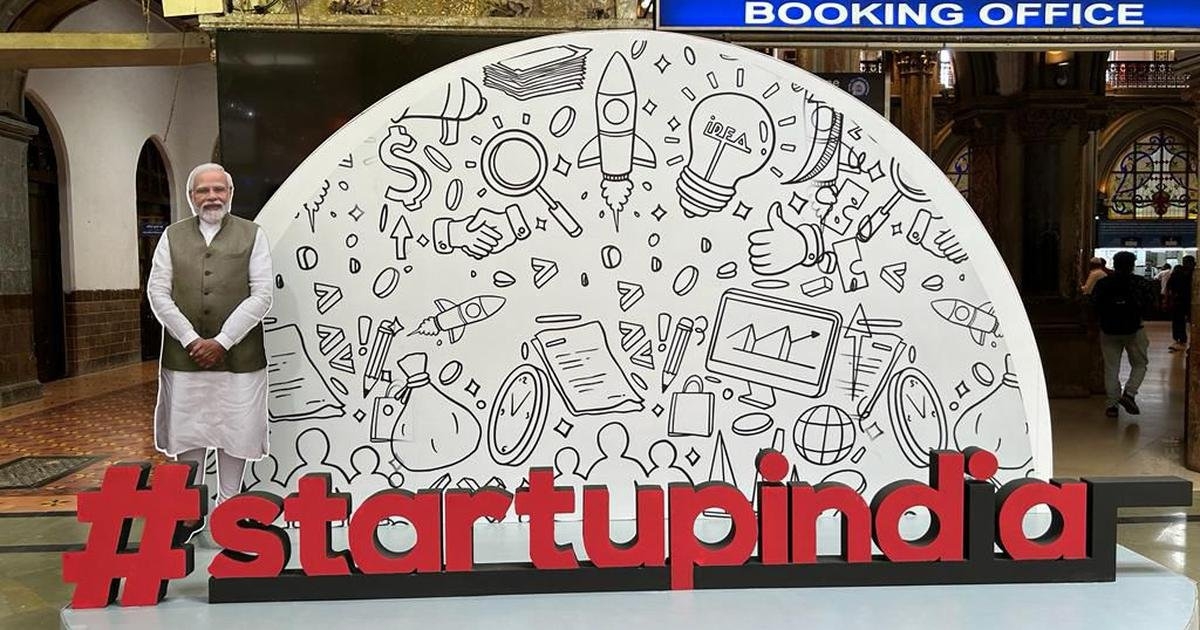
In a true democracy, the economic and social interests of the ordinary citizen and concern for civil equality reside at the heart of all government policymaking. But such righteous compulsions certainly did not determine major policy decisions during Modi's ten-year reign. And despite the chastisement in the recent Lok Sabha elections, the mindset has not changed, certainly not on Indian Railways.
A lot of what happened in key institutions during that dark period cannot be adequately explained through the normal dissection of policy, which predicates an in-depth study and analysis based on inputs from stakeholders, alignment with corporate objectives, and other relevant economic and social factors. The bizarre policy decisions of the last ten years defy such straightforward analysis.
One cannot presume to make any sweeping judgment about the reasoning behind the weird decisions of various government departments in the last ten years. Still, having spent a lifetime as an insignificant but aware micro-component of the awesome Indian Railway system (IR), I do believe that for a proper understanding of the rationale and thinking that provoked the radical but irrational root-and-branch changes wrought by the Modi gang, one would have to venture into the Freudian world of psychoanalysis. Only a psycho-analytical diagnosis can explain the devastating policy and operational blunders on IR in the last decade.
What were the mental processes that prompted the Railway ministry into this 'Muhammed bin Tughlaqi' obsession to do things out-of-the-box by carpet-bombing time-tested systems that have sustained IR for decades?
Being neither a psychiatrist nor a psychologist, I can only attempt to identify the most obvious manifestations of the sickness that gripped IR for ten years and seems still tenaciously to linger. The symptoms overwhelmingly point to an advanced ailment known as CULTISM, which, among other things, has been defined as "the willingness to serve God" and is founded on ignorance, fanatic zeal and anti-intellectualism. It is beyond reason and, hence, beyond negotiation. The primary intent is not the improvement of the organisation but a projection of the cult leader. The overpowering hero-worship so blinds the cult followers that they lose their balance and sense of judgement.
A cult leader with absolute power over his groupies is dangerous, but how much more lethal does he become when he also exercises dominant political power? Cultism was the all-powerful force that overwhelmed the country for a decade and was the determining factor that informed all major decisions on IR.
Traditionally, IR has been recognised as the common man's transport. IR's vision statement of 2011-12 encapsulated the corporate mission: "Indian Railways shall provide safe, efficient, AFFORDABLE, customer-focussed transport." But to put it bluntly, all policymaking in the last ten years was engineered to burnish the image of one man and everything else subordinated to that one mission. The common man's needs were unremembered, as were IR's sacred commitment to be a commercially viable entity.
To propitiate one man and his ego, IR was turned on its head for ten long years. Tried and tested systems have been dismantled, and IR's primary social responsibility of being cost-conscious and even-handed in its functioning has been set aside, as has its sacred commitment to the needs of the common man.
Allow me to first address the biggest scandal ever on IR - the criminal neglect of the ordinary second-class traveller who was erased from consideration while deciding the priorities for investment in new passenger services and improving existing onboard facilities. Most shocking has been the deliberate, precipitous reduction in ordinary second-class accommodation in all categories of trains even as IR splurged on a slew of glitzy but economically ruinous Vande Bharat trains that cater to the well-heeled, affluent passengers - an outrageous example of the 'let them eat cake' syndrome.
One statistic vindicates this grave charge of the 'suit-boot' culture that has swamped the IR: the total number of AC/Executive class passengers carried was 393 million in 2013-14 and increased to 532 million in 2022-23, whereas the ordinary class passengers across all categories have plummeted from 7921 million in 2013-14 to 5859 million in 2022-23. The sharp decline in second-class passengers has happened, not because our Aam Janta has shrunk in numbers but because their needs were never figured out in the callous IR management's calculations. Ordinary passenger trains have been ruthlessly eliminated, second-class accommodation replaced with AC coaches, the legendary Jan Shatabdis disregarded, and what have you!
What explains this lopsided, illogical focus of IR on the better-off citizens and the short shrift given to the common man? To revert to my dilettante Freudian analysis, the salient point is that the common man and his needs are unprepossessing and not 'glamorous' and eyeball-catching, which are de rigeur requisites in the regime's singular obsession with projecting our tinsel Superman.
But the Vande Bharat clutch of trains are sleek and glitzy, and hence the sole preoccupation of the railway management, despite being a dead loss to the nation - financially ruinous, elitist and at complete odds with the nation's requirements. They throttle line capacity on critical routes and have serious technical issues relating to power consumption and riding comfort. Out of 50 odd pairs of Vande Bharat trains, about 70 per cent are being run with half the payload – 8 cars instead of 16 cars for want of demand. Can there be anything more scandalous than such colossal wastage in a country where scores of ordinary passengers travel on the footboards, risking life and limb?
The Opposition must demand a white paper on the devastation wreaked in passenger services on IR and the adverse outcomes from other vanity projects like the Bullet train, the frenetic, injudicious electrification of the entire system resulting in massive dissipation of the Railways' diesel assets.
While splurging on such wasteful projects, IR has drastically cut down manpower even in the critical safety categories, a fact highlighted by the recently appointed Chairman, though he disingenuously attributed the staff shortage to exponential growth in railway infrastructure. The brute fact is that railway safety was the lowest priority as it could not be harnessed for image-building.
Much has already been written about the subsuming of the Railway Budget into the General Budget in 2016 and the revamping of the management structure as part of the Modi regime's zany obsession to showcase radical transformative change in its watch. And so I shall refrain from belabouring these high crimes except to point out that these blunders have already begun to bite the nation. The discontinuance of the Railway Budget has allowed impunity and profligacy in spending, with no public oversight and zero accountability. The debt servicing on IRFC loans used for buying rolling stock is already at an unsustainable 22.5 per cent of IR's working expenses, and this is only the tip of the iceberg! The bogus, ill-thought 'Indian Railway Management Service' scheme has unravelled, with an acute shortage of technical specialists, so much so that there is a move afoot to re-employ retired railway engineers. The grapevine suggests a return to the old system of recruitment to the Group' A' services.
Who is responsible for the awful mess? Undoubtedly, the cult leader is the main culprit in this complete desecration of systems that were painstakingly built over the decades. And yet our 'non-biological' PM had the gall to pronounce that "all-round work to transform the Railways began only after 2014. Everyone was clueless before this." My God! What hubris and benighted unawareness!
To propitiate this one man and his ego, the entire Indian railway system dropped down to its knees. For the first time ever, a train service—the Namo Bharat—has been named after a PM, and that too a serving PM—the most egregious example of self-glorification. That's cultism!
There are other villains involved in this wrecking of the IR. Among those who were actively associated with the crazy changes in systems are the right-wing cabal of Bibek Debroy, Sanjeev Sanyal, Partho Mukhopadhyay and a host of others who know better and yet bartered away the interests of the Railways to propitiate their god. In the same bracket fall the top management of IR during this critical time, who did absolutely nothing to protect the IR's interests. They have much to answer for.
This rogues' gallery must also include my ilk – the superannuated Railway officers across departments. It is astounding to see how these seasoned railwaymen, with nothing to lose, have junked allegiance to their professional alma mater to become devout bhakts. Their WhatsApp groups are unabashed Modi fan clubs that tolerate no criticism of their god. Unlike retired IAS, IPS and other service officers who have raised their voices in protest of some of the autocratic regime's unjust policies, these deplorable retirees watched unmoved as IR was being mauled. Shame on them!
Let me conclude with a quote from Albert Camus: "By definition, a government has no conscience. Sometimes, it has a policy but nothing more." What hope is there when cultism is the policy?
.jpg)
.png) Cedric Prakash
Cedric Prakash

.jpg) Elsa Lycias Joel
Elsa Lycias Joel
.jpg)
 A. J. Philip

.png) Jacob Peenikaparambil
Jacob Peenikaparambil
.jpg)
.png) John Dayal
John Dayal
.jpg)
.jpg)
.png) Joseph Maliakan
Joseph Maliakan
.png)
.png) Robert Clements
Robert Clements
.jpg) Cedric Prakash
Cedric Prakash

 ICPA
ICPA