

.png) Chhotebhai
Chhotebhai

On Sunday, 10th December, I heard the first reading from Isaiah (40:1-5, 9-11) on freedom from the Babylonian exile. The reference to Babylon reminded me of the foot-tapping Boney M. song “By the Rivers of Babylon”. The music is pulsating, though I’m pretty sure that most people don’t know the meaning, context or even the song’s lyrics.
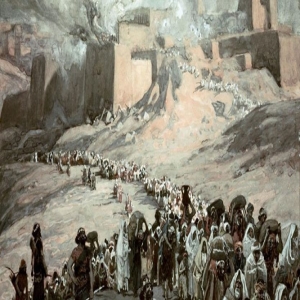
The words are from Psalm 137 regarding the Babylonian captivity of the Israelites from 598 to 538 BC. The capital of Judah was first besieged by King Nebuchadnezzar in 598 BC, and Jerusalem was destroyed in 587. In 538, the Israelites were set free by the Zoroastrian king Cyrus of Persia. Geographically, the city of Babylon (Babel in Hebrew and Bab-ilu in Akkadian) lies on the left bank of the Euphrates River, where modern-day Baghdad is now situated. It means “gate of the gods”. In modern times, the Germans excavated the city between 1899 and 1917 C. E. So much for the historical part.
The Prophet Isaiah lived about 200 years before the Babylonian captivity, so his message of deliverance is genuinely prophetic. One would have to look at it with the eyes of faith. When we turn to Psalm 137, we need more than just faith. This is because the literal words of the psalm would be music to the ears of Israeli Prime Minister Benjamin Netanyahu, as it seeks revenge for injustices perpetrated on the people. Its concluding words are:
“Daughter of Babel, doomed to destruction, a blessing on anyone who treats you as you treated us, a blessing on anyone who seizes your babies and shatters them against a rock” (Ps 137:8-9). Such words are both frightening and deplorable. Yet there are many, even among church-going Christians, who would believe that this is divine retribution. Some choose to equate this with the Islamic terrorists (read Hamas) attacking the innocent people of modern-day Israel. Hence, the latter is justified in smashing the heads of innocent babes in the Gaza Strip! The implications are horrendous.
Gaza, what’s the connection with Babylon or Christmas? I recently received two videos. One is of a Lutheran Palestinian pastor, Munther Isaac, titled “In Solidarity with Gaza”. In this, he shows a crib with the infant Jesus buried in rubble. It is expressive of many children being pulled out of the ruins of destroyed buildings in Gaza. Jesus is in solidarity with the pain and suffering of such afflicted people. For this reason, all the churches in Jerusalem have decided to commemorate Christmas without any festivities this year. They seek to draw the world’s attention to the suffering of the Palestinian people.
Now, let’s connect the dots. The psalmist says, “How can we sing the Lord’s song in a foreign land”? (Ps 137:4). Till today, parts of Palestine remain occupied by Israel. When Jesus was born in the same Bethlehem (in Palestine, even today), it was occupied by the Romans. The infant Jesus had to escape the wrath, jealousy and insecurity of King Herod. He had to flee to Egypt (cf Mat 2:14). The innocent babes were killed (cf Mat 2:16). Terror and bloodshed were perpetrated by those in power. The innocent children were just so much collateral damage!
I took pride in erecting a beautiful crib in my home from as far as I can remember. I still do and had plans for this year as well. Then I saw the rubble video, and my heart skipped a beat. Perhaps this year, my crib would be modelled on the Palestinian one, replete with rubble, and celebrations would be muted.
The other video was of a guitarist singing “Away in the Manger” parody. It was so ominous that I cannot but transcribe it in full:
“Away in bomb shelters
Concrete for a bed
The little lost children
Lay down their sweet heads.
The drones in the dark sky
Look down where they lay
While they prayed to the angels
To fly them away.
The mothers are crying
The babies awake
The building is rocking
The whole city shakes.
Bless all the poor children
Who are going through hell;
But the Lockheed and Boeing shares
Are doing so well”!
Lockheed and Boeing are, as we should know, the manufacturers of warplanes. Do not these lyrics stir even the most hard-hearted? Maybe not. After seeing these videos, a church-going friend said to me that all these “terrorists” should be nuked! I was dumbstruck.
The forefathers of the present-day Israeli nation spent 40 years in the desert before entering the Promised Land, then another 60 years in Babylonian captivity. The present residents of Gaza/Palestine are in no way connected with or responsible for those events of yesteryears. More recently, it was Hitler and his mistaken Aryan superiority that exterminated millions of Jews. Can they hold modern-day Germany to account for that?
Pope Francis is on record saying that the only permanent solution to the conflict is the two-nation resolution passed by the U.N. in 1947. Israel got its share, but the Palestinians didn’t. We, too, in India, have experienced the pain of partition. Yes, many died on both sides. But imagine if partition had not happened (in the same year, 1947) and the people of present-day Pakistan were still under Indian rule and control? What daily horrors would arise between an assertive state and a people seeking freedom?
I recently read about a CCBI (L. R.) “Strategic Planning” meeting in Delhi. There was much pious talk about the “majesty of God”. I found the terminology obnoxious. Did these worthies strategise like their counterparts in Jerusalem and Palestine did? Was there any strategy to have less “majesty” and more humility and simplicity this Christmas? Was there any attempt to think out of the box, to be different?
I revert to 1990. I had just been elected the National President of the All India Catholic Union. There was a rally of about 1.3 lakh Christians from all over India at the Boat Club Lawns, New Delhi. It was in support of reservations for Dalit Christians. From the podium, I announced that if our demands were not met before Christmas, we would have a Christmas Satyagraha without any festivities and lighting.
Bishop Patrick D’souza of Varanasi, who was the Chairperson of the CBCI Ecumenical Commission, supported me. Several dioceses, parishes and institutions observed the Satyagraha. I had undertaken a 7-day fast at Goldakkhana, New Delhi, in preparation for the same myself.
Simply put, be it in social, spiritual, political or military warfare, strategising is critical. One needs to also anticipate the other side’s moves and prepare accordingly. That seems glaringly absent from the Catholic Church in India.
Families, in particular, look forward to the joy, reunions and marriages at Christmas time. I would not like to dampen that spirit, but we can find a middle path irrefutably. As the Latin saying goes, “Virtus stat in medio”. I will share a minor incident to put things in perspective.
A stunted young man fills the air at the pump where I fill fuel. Seeing my cross and Christian identity, he proudly told me he had recently become a Christian. He even went to jail for it and got out only after coughing up Rs 5000/- to the cops. Ironically, the Police Station is just across the road from the Petrol Pump. For the last two months, he has reminded me that “our festival is coming”.
Perhaps the poor and the persecuted are the only ones who understand the true meaning of Christmas, while the others regale with meaningless carols like “Jingle Bells” with a portly Santa thrown in. This Christmas, could we take the trouble to remove the rubble from someone else’s life and burst a bubble to bring hope and peace.
The writer wishes all his readers a blessed Christmas. He may be contacted at noronha.kp@gmail.com

.jpg) Stanislaus Alla
Stanislaus Alla
.jpg)
.png) Cedric Prakash
Cedric Prakash

.jpg) Elsa Lycias Joel
Elsa Lycias Joel
.jpg)
 A. J. Philip

.png) Jacob Peenikaparambil
Jacob Peenikaparambil
.jpg)
.png) John Dayal
John Dayal
.jpg)
.jpg)
.png) Joseph Maliakan
Joseph Maliakan
.png)
.png) Robert Clements
Robert Clements
.jpg) Cedric Prakash
Cedric Prakash