


.png) Joseph Jerald SJ
Joseph Jerald SJ

Have you ever heard of a Catholic priest working among gangsters? Have you ever heard success stories of gangsters confessing their past and leading dignified lives in society? Father Gregory Joseph Boyle (Greg), a 69-year-old Jesuit Priest, is the founder and director of Homeboy Industries in Los Angeles, USA. He has gone beyond the conventional understanding of priesthood. Homeboy Industries, formerly known as 'Jobs for a Future', is the world's most extensive gang intervention and rehabilitation programme. Established by Fr Greg in 1988 as part of Dolores Mission Parish to address gang activities in the area, Homeboy Industries has grown significantly and now serves over 10,000 individuals annually.
Homeboy Industries is a place of hope for all the ex-gang members. The non-profit organisation helps the members to deal with their past lives and build themselves for a better future. As a result of affirming the members' talents and accompanying them daily, thousands of success stories have emerged. Fr Greg Boyle deals with every member he encounters with compassion and love. Most of the members entering Homeboy Industries feel accepted. As a result, gang activities that resulted in violence and death of many youths and children have drastically decreased, says Fr Greg in one of his interviews. Fr Greg was awarded the Presidential Medal of Freedom by the President of the USA at the White House on May 3, 2024, for his selfless service to the country.
Many priests actively engage in pastoral work, sacramental ministries, education, social work, healthcare, and more. However, these are not the only ministries a priest could aspire to. A priest need not always be confined to institutional structures. The call to priestly ministry transcends boundaries. Understanding one's own context can lead to discernment and the development of innovative ministries. This necessitates a tremendous amount of commitment, dedication and, above all, a compassionate heart to reach out to those in need. We have had many priests, sisters, and brothers in the past who have been part of unconventional ministries. Many priests, sisters, and brothers carry out ministries in prisons, with trafficked women, street children, etc. We also have priests and sisters who work as supreme and high court lawyers. Social and human rights activists have also laid down their lives for a cause. However, emerging ministries, such as working among transgender individuals and migrants and empowering them, require more attention.
In his recent letters (May 2, 2024), Pope Francis addressed around three hundred parish priests from across the globe in Rome. He encouraged them to listen to the Spirit's voice within and move forward where the Spirit of Christ leads. He offered three suggestions for the parish priests. Firstly, the Pope emphasised the importance of discovering the charismatic gifts of the laity. Secondly, he encouraged priests to learn the art of communal discernment. Thirdly, the Pope urged priests to base everything they do on the spirit of sharing and fraternity among themselves and with the bishops. The suggestions offered by the Pope could help many priests and religious in our country, India, develop innovative ministries like that of Fr Greg that empower people who have been socially neglected.
DARE TO THINK DIFFERENTLY
A call to innovative ministries that address the real-life situations of the contemporary world invites priests to dare to think and discern out of the box. A willingness to work outside institutional structures poses uncertainties and may fail to yield successful statistical data at the end of the day. Establishing innovative ministries takes time. It involves a lot of unstructured background work that may fly under the radar of superiors, priests and laity, potentially leading to criticism. However, Prayer, patience, and perseverance are essential for moving forward.
EMPOWER THE OTHER
Father Greg empowered former gang members and facilitated their journey of self-discovery. The focal point of every story was the individuals involved with Homeboy Industries. In an unstructured working scenario, openness to new ideas, dialogue, communal discernment, and sharing are essential for mutual enrichment and growth. The centre of attraction in our innovative ministries should be those we serve, emphasising a decentralised approach that enables people to assume leadership roles.
BUILDING TRUST
Priests play a significant role in people's lives, and Fr Greg inspires us. Ministries become more fruitful and satisfying when a trust element is present. Mutual trust between priests and the people enhances the quality of our ministries.
ACCEPTANCE AND BELONGINGNESS
Creative ministries may have taken a back seat in the history of our dioceses/provinces. A deeper reflection on these instances can help us learn from our mistakes. Sometimes, certain ministries we undertake may not be acceptable to other priests, religious, and laity. We need to conscientise ourselves and the priests, religious, and laity to take ownership of the ministries. The Church's ministries are not solely the responsibility of priests or religious who do it. The ministries belong to the Church; it is God's work.
Fr Greg's example inspires and provides many insights. One key learning and the foundation of every ministry is to have a deep personal love for Jesus Christ and to develop a compassionate heart that reaches out to people's cries.


.jpg)
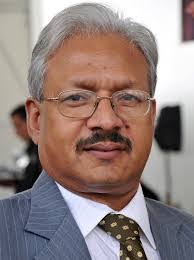 A. J. Philip
.jpg)
.png) Jacob Peenikaparambil
Jacob Peenikaparambil

.png) Chhotebhai
Chhotebhai

.jpg) P. A. Joseph
P. A. Joseph
.png)
.png) Robert Clements
Robert Clements
.jpeg) A. J. Philip
A. J. Philip
.jpg) Jacob Peenikaparambil
Jacob Peenikaparambil