
.jpg) Dr Mudita Menona Sodder
Dr Mudita Menona Sodder
In his book, 'The Dream of the Earth,' Eco-Prophet Thomas Berry said, "We can never do alone all that is possible for us to do together." How true! We women are a full circle with the power to create, nurture and transform. We are strong, confident, competent and have a caring heart. Wonderful, outstanding, marvellous, and adorable are adjectives often used for us women. However, what we lack is the ability to collectively accelerate action – the theme for International Women's Day (IWD) 2025 for gender equality.
Empowered women can empower the world. We have the potential to break barriers, build bridges, inspire, lead and empower others. We keep thriving and never give up. With our diverse gifts and talents, we are like the rainbow wedded to our many commitments. The colours of IWD 2025, purple for justice, dignity and loyalty to the cause; green for hope; and white for purity, are symbolic. We must speed up progress and ensure that other women are not left behind.
We must demand that our leaders take action and invest in promoting women's rights and gender equality. Our responsibility is to engage media, corporate leaders, governments, community leaders, civil society and youth to take action wherever we are. We cannot allow systemic barriers and biases to impede the next generation, particularly young women and adolescent girls.
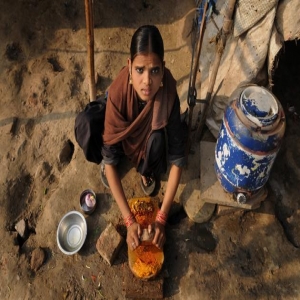
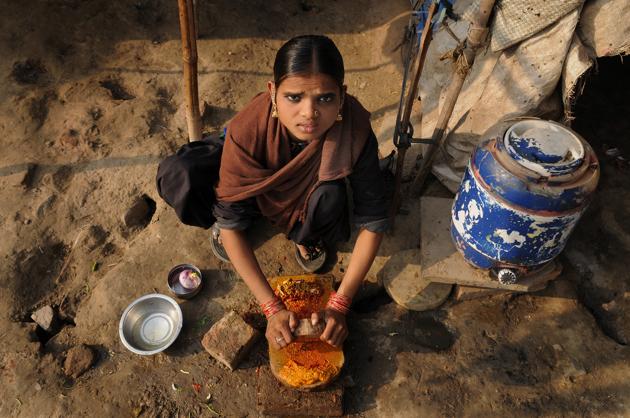
Unfortunately, in India, women's literacy rates are significantly lower than men's. Sixty-eight per cent of the school drop-outs among children are girls. According to a 2021 Census, female literacy is 70.30%, and male literacy is 84.70%. The girl's secondary status has gone deep into the Indian conscience and psyche. From female foeticide, she is referred to as someone's daughter, wife or mother, treated badly if she bears a girl and even worse, if she is childless or widowed, and she is even seen as a liability, as she "belongs" to her husband's family.
Education is the entry point to access other opportunities, having a ripple effect within the family, the community and across generations. From the Indian policy perspective, we have sound programs like the Right to Education and the mid-day meal. To achieve gender inclusion, female education is free up to junior college. However, a conducive environment and effective mechanisms to implement the same are tremendous challenges in India.
Poverty is one of the primary factors that denies girls access to education. She is considered a good source of free labour to manage the domestic work at home and look after the younger siblings. Trafficking and corruption have resulted in girls being blackmailed, cheated and exploited by agents. Some girls are even sold by their poor relatives. An unsafe and insecure environment is another major factor responsible for female drop-outs from school. As such, she is often married before puberty.
Every time a woman is not allowed to blossom and bloom to her full potential and is suppressed and denied education, we disrespect God, who made us in His image and who wants us to have life to the fullest. We need to make this a reality by daring to educate the girl child. Functional literacy programs must be implemented in all villages. Sessions on developing women's potential and self-help groups, micro banking, etc, to boost their confidence will go a long way in promoting gender equality.
The Church's selfless efforts to make quality education and hostels for students accessible to even the less privileged in remote interior parts of India are indeed commendable. We must create a positive attitude and atmosphere to welcome gender equity. The girl child, if educated, will have the power and potential to transform society. We still have a long struggle ahead to usher in God's reign and to work towards fulfilling His promise to all. Let us all unite, with our diverse and valuable spirits and gifts, to make gender equality, which is critical to the development and peace of every nation, a reality.
Happy International Women's Day on March 8, 2025!

.jpg) Stanislaus Alla
Stanislaus Alla
.jpg)
.png) Cedric Prakash
Cedric Prakash

.jpg) Elsa Lycias Joel
Elsa Lycias Joel
.jpg)
 A. J. Philip

.png) Jacob Peenikaparambil
Jacob Peenikaparambil
.jpg)
.png) John Dayal
John Dayal
.jpg)
.jpg)
.png) Joseph Maliakan
Joseph Maliakan
.png)
.png) Robert Clements
Robert Clements
.jpg) Cedric Prakash
Cedric Prakash