
.jpg) Joe Eruppakkatt
Joe Eruppakkatt

Recently, Pope Francis began his Bahrain trip with these words, “Let us reject the logic of weapons and change course, diverting enormous military expenditures to investments in combating hunger and lack of health care and education.” The words are a powerful warning to the world leaders and those engaged in senseless wars and terrorist activities. This and other speeches of Pope Francis, the modern-day prophet, remind us of the Old Testament prophets who courageously confronted the powerful leaders and authorities.
A prophet teaches the truth. He calls a spade a spade. He courageously points out the flaws in the society and calls people to mend their ways or face the inevitable consequence of perishing. A prophet gives hope to those who are willing to change. He stands against the powers-that-be as sign posts to integrity, honesty and truthfulness. He is the voice of the voiceless, the oppressed, the weak and the marginalized in the society. He is the embodiment of courage and fearlessness in the face of harassment and torture for speaking truth.
Journalists as Prophets
The word prophet comes from the Greek word for spokesman: Someone who speaks on behalf of God. And the Hebrew word for Prophet is Navi/Nabi meaning someone who proclaims, mentions, summons. Herein lies a clear connection between a prophet and a journalist. In fact, a journalist is a spokesman, he/she proclaims the truth, summons or calls upon people to change. Prophets of the Old Testament such as Isaiah, Jeremiah, Elijah, Joel and Amos stand out as God’s spokespersons who called upon people to reform their life. Most of them paid the price for their courageous prophecy with their blood. John the Baptist, the one who came to prepare the way for Christ, called the people of his time ‘brood of vipers’ and cautioned them that the axe was laid at the root of the tree! They needed to change or they would all perish.
Like the prophecies of the Old Testament, the purpose of Journalism is communication and education, leading to social, political and cultural changes. Journalists communicate because people have the right to know the events accurately and truthfully, and form their own enlightened opinion. This is a prophetic call. But often the right of the people to know and the duty of the journalists to communicate are both either curtailed or weakened by several factors even in the so-called democracies. This leads to a weakening of our democratic institutions and the very system of democracy itself. Without proper communication of information and formation of enlightened public opinion, there is no survival for a democratic system. There can only be dictatorial regimes like in North Korea, China and to some extent Russia.
Changing Journalism in India
“Yesterday the country was a slave, a journalist free, but today the country is free and a journalist a slave,” says Satyendra Singh Rajpurohit in his blog, “Journalism is Changing these Days”. The reasons for change are many. On the one hand, the big players in business absorb the smaller media houses and create huge media organisations, wielding enormous power, wealth and clout. They dictate terms to their journalists as to what to report and what not. The reporter and the writer have to cater to the interest of the powerful owner and those who finance him through advertisements. Often the journalists are paid to tell what the owner wants to tell – lies and half-truths. Truth becomes a casualty. Th public are fed with lies and so fooled to believe what the media reports.
Yet another reason is the fear complex. Journalists are often threatened with raids, arrests and imprisonments by the ruling dispensations. As long as they report according to the dictates of the rulers and the powers-that-be, they are safe and secure. The moment they go against the interest of those in power, they are in their bad book and are likely to be booked any moment for imaginary or invented crimes such as treason, antinationalism, inciting communal tension, insulting the chief executive, etc. In such atmosphere of fear, journalists are afraid to tell the truth. As a consequence, what the public get is biased and distorted news.
Prophetic Journalism in India
There are of course, exceptions to this state of affairs. The following three scenarios give us the hope that prophetic journalists who strive to tell the truth do exist at least in some quarters.
“News that should be headlines” is an Instagram page owned by the well-known media person Faye D’Souza. What Ms D’Souza does is to pick up and highlight the news that should have been headlines in the mainstream media, but ignored or overlooked by them for reasons best known to them. Surprisingly, Ms D’Souza has commanded a following of 8,43,000 people on Instagram! Add to these a whopping 1,61,000 YouTube subscribers she has amassed! And the good news is that both these are growing day by day. So much for people’s thirst for unbiased, true and authentic news and Ms D’Souza’s courageous prophetic journalism!
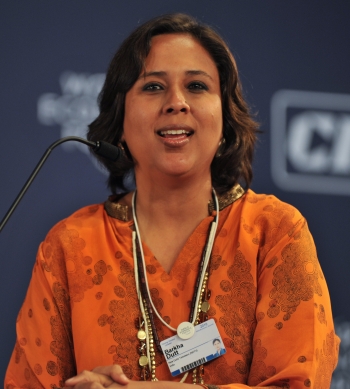
Ms Barkha Dutt, another journalist who needs no introduction, is the founder and of Mojo Story. This is an online portal that has the slogan: “People First – Courage, Compassion, Creative. Ms Dutt writes her stories not sitting in the airconditioned rooms, but travelling around the country, meeting people, talking to them, knowing their struggles, successes, failures and aspirations. During the first wave of Covid 19, hundreds of thousands of migrant workers left main cities to return home, mostly walking on foot, carrying their meagre belongings. It was perhaps the biggest mass exodus of people in human history, but the mainstream media conveniently ignored the poor people and their plight for several days. Ms Barkha Dutt was not one to ignore this catastrophic exodus. She hit the road for 120 days, covering 24,000 kilometres across 13 states to report on the plight of the moving migrant workers. She kept the nation updated on the pandemic hitting the poor and marginalized people. This was a story of courage, conviction and authenticity – all what prophetic journalism is.
The Mojo Homepage says, “Every sunrise gives us a fresh start and something new to relish. Every day, Team Mojo brings you a fresh serving of content covering motivational pieces, listicles, snippets from the women’s space, thought provoking viewpoints, flashbacks, things to relax with, or simply savour.” According to Ms Dutt, “There are some stories that you just know you cannot understand sitting in your office or sitting in your house. You need to go there and find the truth.” Truth is what Mojo is all about. Prophetic courage is what Barkha Dutt epitomizes in her journalistic approach.
Hardly any mainstream media covered the story of the striking fishermen in Kerala. Authentic reporting of this story would mean going against interest of Gautam Adani, the powerful crony capitalist. The Vizhinjam Seaport project by Adani group has already displaced thousands of fisherfolk and deprived them of their livelihood and habitat. On the other hand, it is the problem faced by a negligible, poor, marginalised group of people, mainly from the Catholic community. The mainstream media found no interest in feeding the public with the daily stories of these people’s struggle, how priests and even bishops in their clergy outfit led from the front and fought for the rights of a neglected and grossly oppressed people. After all, taking on Adani’s project would badly hurt the interest of the media organizations. So, the best option was to ignore and move on with the stories that were convenient to them.
But not surprisingly, Barkah Dutt’s Mojo Stories published a brilliant story titled, “Fishing Communities Resist Mega Adani Port Construction, Raising Concerns Over Its Negative Impact on Livelihoods.” Mojo had the courage to quote the local, affected people and say, “the environmental impact study for the project does not adequately address the issue of coastal erosion and its impact on the livelihoods of local population.” Mojo reported: “The local fishermen held demonstrations, claiming that the port’s development had negatively impacted their way of life, made hundreds of families homeless, and damaged the environment.”
The above examples show how prophetic journalism is important and how it can influence public opinion. Let such tribe grow and redeem this noble profession from further weakening.
.jpg)
.png) Cedric Prakash
Cedric Prakash

 ICPA
ICPA
 ICPA
ICPA
 ICPA
ICPA
 ICPA
ICPA
 ICPA
ICPA
 ICPA
ICPA
.jpg)
 A. J. Philip
.jpg)
.png) Jacob Peenikaparambil
Jacob Peenikaparambil
.jpg)
.png) John Dayal
John Dayal