

.jpg) P. A. Joseph
P. A. Joseph

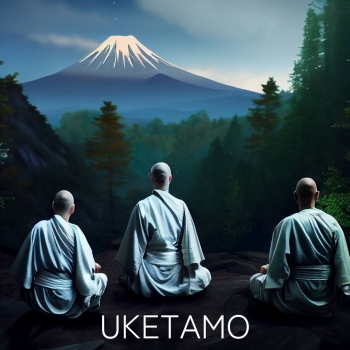
There is a Japanese word UKETAMO, meaning “I accept with an open heart.” In our life we come across a number of issues. Some of these are positive, some negative, some moments are highly tensed; at times we are unable to proceed further, and we are left with no one to help us, no one to understand us. Sometimes we are not understood, or even totally misunderstood. All these have sometimes grave consequences and we are not able to take a step further. In all such moments the Japanese advice is UKETAMO, ‘I accept with an open heart.’ This capsule of spirituality is discovered by years of experience by numerous people who lived the life just like us.
Japanese history is a history of struggles, both environmental and man-made. During the terminal end of World War II, Japan was literally crushed and destroyed with US atom bombs in Hiroshima and Nagasaki in July 1945, killing 80,000 and 40,000 people respectively. The people encountered hard life, and they bore it in agony and heroism. The whole world accepts the history of endeavor and struggle of the Japanese. Let me try this in my own life, saying to myself even in moments of minor struggles, UKETAMO ‘I accept with an open heart’, a truly positive approach to life.
There is yet another word ARIGATO, meaning ‘Thank You’. ‘Thank you’ is a personally addressed word ‘to you’, to someone. We don’t say ‘thank you’ in the air. We look at someone and tell to the person. The best way would be to say ‘thank you’ with eye contact. Say it looking at the person in front of you. That means a lot. In all the moments of happy and other moments let us have the courage to say: thank you. What better word we can say to God than ‘Thank You’. It will leave us in peace of heart and soul. When we have a tensed relation with neighbors, parents, children, companions, spouse, brother or sister, helpers, if you can say ‘thank you’, it is wonderful.
We are not alone. We live with others. We interact with others. We confront them, or we are challenged by others. Sometime we try to change the situation in which we are placed. As in a game I have to play with such and such persons; sometimes we may be able to change such situations. If we can change it, well and good. Or, if that is not possible, we must be able to change our mindset. That is an intelligent and mature approach; when we cannot change others we change our mind-set, our disposition, our attitude, our approach, etc. With some I cannot be too personal; ignore it; let them mind their business; I do in a different way; the issue is well handled and managed.
Life often may be confrontation with others. All problems we face are inter-personal. It would appear that if one is alone no problems would crop up. May be, then we are not humans. It demands giving and taking; criticizing and accepting criticisms. We can only dream of a situation when everything is so nice and beautiful. Such situations are rare. As we are all individuals and brought up with varying options and priorities, we cannot expect everything as we want; hence problems crop in. This is a reality to be accepted. Happiness is not absence of problems, but it is the ability to deal with all of them. Wisdom demands that we be aware of such situations, and be open to accept these in a very comfortable and healthy way.
.jpg)
.png) Cedric Prakash
Cedric Prakash

.jpg) Elsa Lycias Joel
Elsa Lycias Joel
.jpg)
 A. J. Philip

.png) Jacob Peenikaparambil
Jacob Peenikaparambil
.jpg)
.png) John Dayal
John Dayal
.jpg)
.jpg)
.png) Joseph Maliakan
Joseph Maliakan
.png)
.png) Robert Clements
Robert Clements
.jpg) Cedric Prakash
Cedric Prakash

 ICPA
ICPA