

.jpg) P. A. Joseph
P. A. Joseph

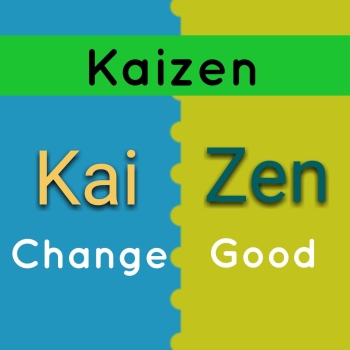
Every Japanese is aware of the practice of Kaizen. Even if some may not know the meaning of the word Kaizen, they are living it. Kai + zen means change+good, change for good, better and best. It means continuous improvement in the culture or the way of doing. It starts with you, me and everyone. It engages in everything small or big. In Kaizen no measure is made if a thing is small or big. Indeed, everything small is important. Every beginning is small, as every journey is begun by one little step. It touches everyone, every day and everywhere. It does not underestimate a small thing. It is a process; it is a movement for good, better and best. It is a thought pattern of gradual process, a process of culture of growth.
Kaizen’s main features are: team work, personal discipline and reducing and eliminating of waste, empowering everyone, excluding no one, never ignoring small things, seeing to continuous improvement, being transparent, being economic, focusing not only on the goal but on process, on standardized works, enforcing improvement, documenting the performance through SMART-analysis (specific, measurable, achievable, relevant and time bound).
Kaizen’s very important aspect or dimension is productivity improvement. And every attempt is attuned to it. Hence no waste of time in reviewing production -- procedures, seeing to systematic approach, reviewing techniques, going to least details, reorganizing process, engaging new techniques, replacing of operators, looking for more efficient hands, evaluating the whole process, etc.
In Kaizen always these are maintained: relationship with the team members (employees), keeping the movement as process, quality management, willingness to change in the light of new insights, more relevant technologies, identifying the random problems, collecting facts and information, negotiating for appropriate solutions, efficient implementation, standardizing process, and ever being totally open, etc.
Kaizen in deep sense is business-oriented; it is productivity-intended, measuring investment and looking for due return with happy interest, and the joyful realization of all that is hoped for. Every penny, every planning, every dream, every moment of anxiety is to be rewarded hundred-fold and even more. All who are involved and who shed sweat and blood are to be fully satisfied. Humans who spent sleepless nights, who drew the extensive blue print, who burnt the mid-night oil in work shop, who forgot the work time as day or night, who were fully in sway and the flow, who maintained the process amidst all unsure, risky moments, should enjoy the “eureka’ experience and excitement at the moments of total victory.
Kaizen is like harmony and symphony. As in music or orchestra, all different instruments are fine-tuned, so in kaizen all attempts in the process are well coordinated, synchronized, and attuned in the process and the goal. There is profound music we should say. For Japanese, Toyota car is the result of thousands of engineers working in different places and the products of each one is assembled as in the music. It is said one unit of Toyota manufactures only nuts and bolts. All these are done with at most care to satisfy the precision to 100 % perfection. There is no chance of rejecting one nut. That is Kaizen philosophy you accept.
.jpg)
.png) Cedric Prakash
Cedric Prakash

.jpg) Elsa Lycias Joel
Elsa Lycias Joel
.jpg)
 A. J. Philip

.png) Jacob Peenikaparambil
Jacob Peenikaparambil
.jpg)
.png) John Dayal
John Dayal
.jpg)
.jpg)
.png) Joseph Maliakan
Joseph Maliakan
.png)
.png) Robert Clements
Robert Clements
.jpg) Cedric Prakash
Cedric Prakash

 ICPA
ICPA